Maria Lassnig
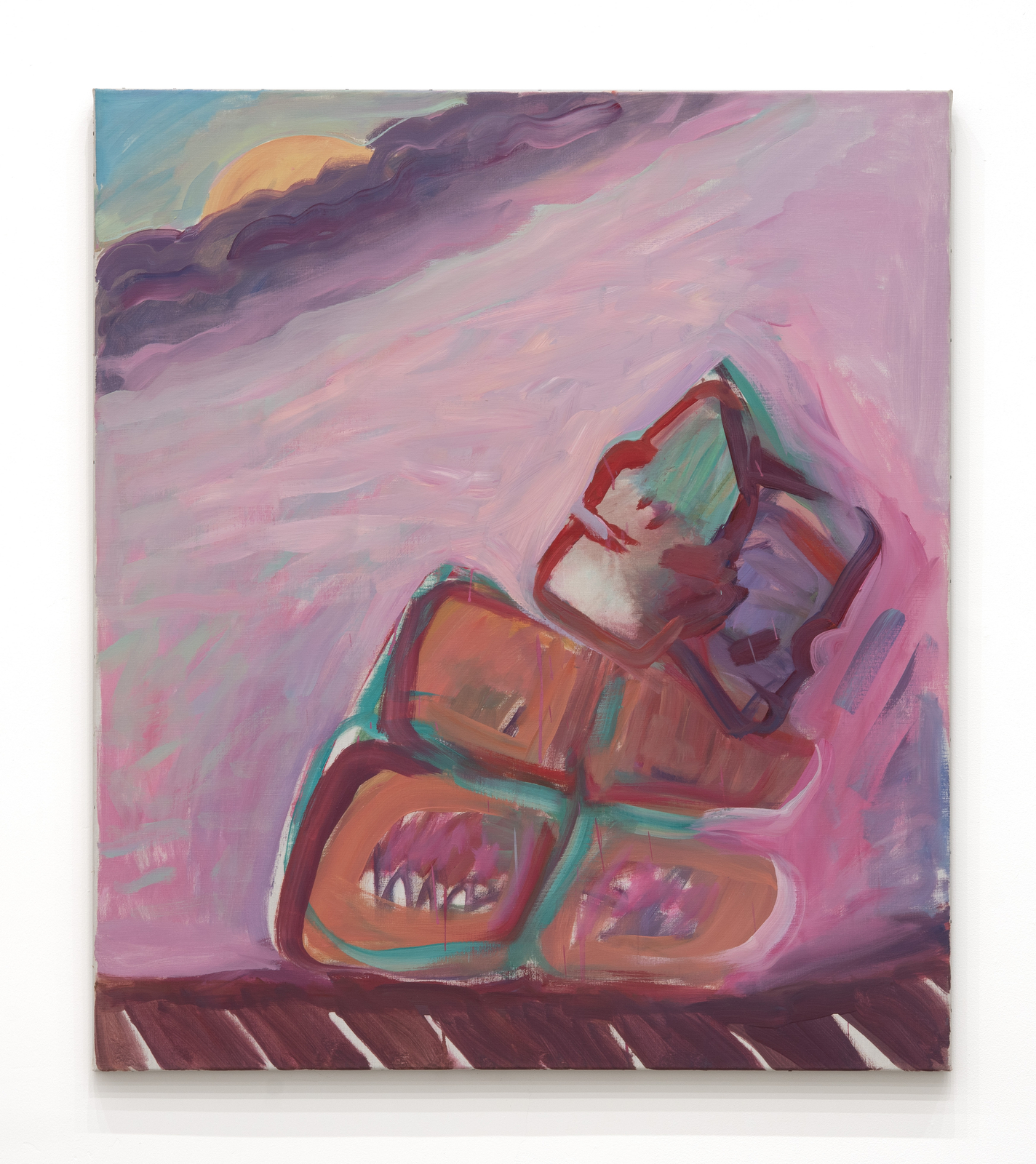
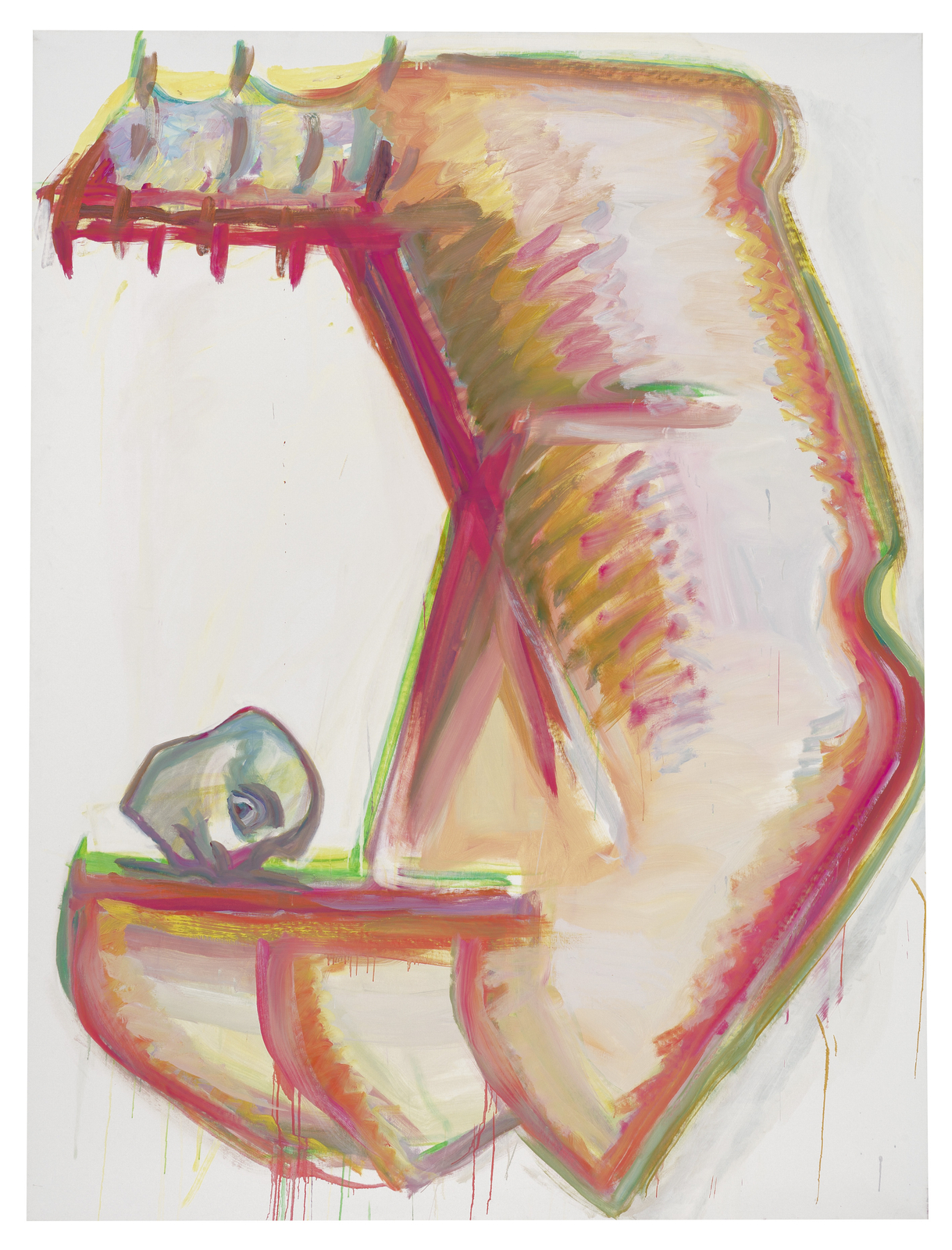
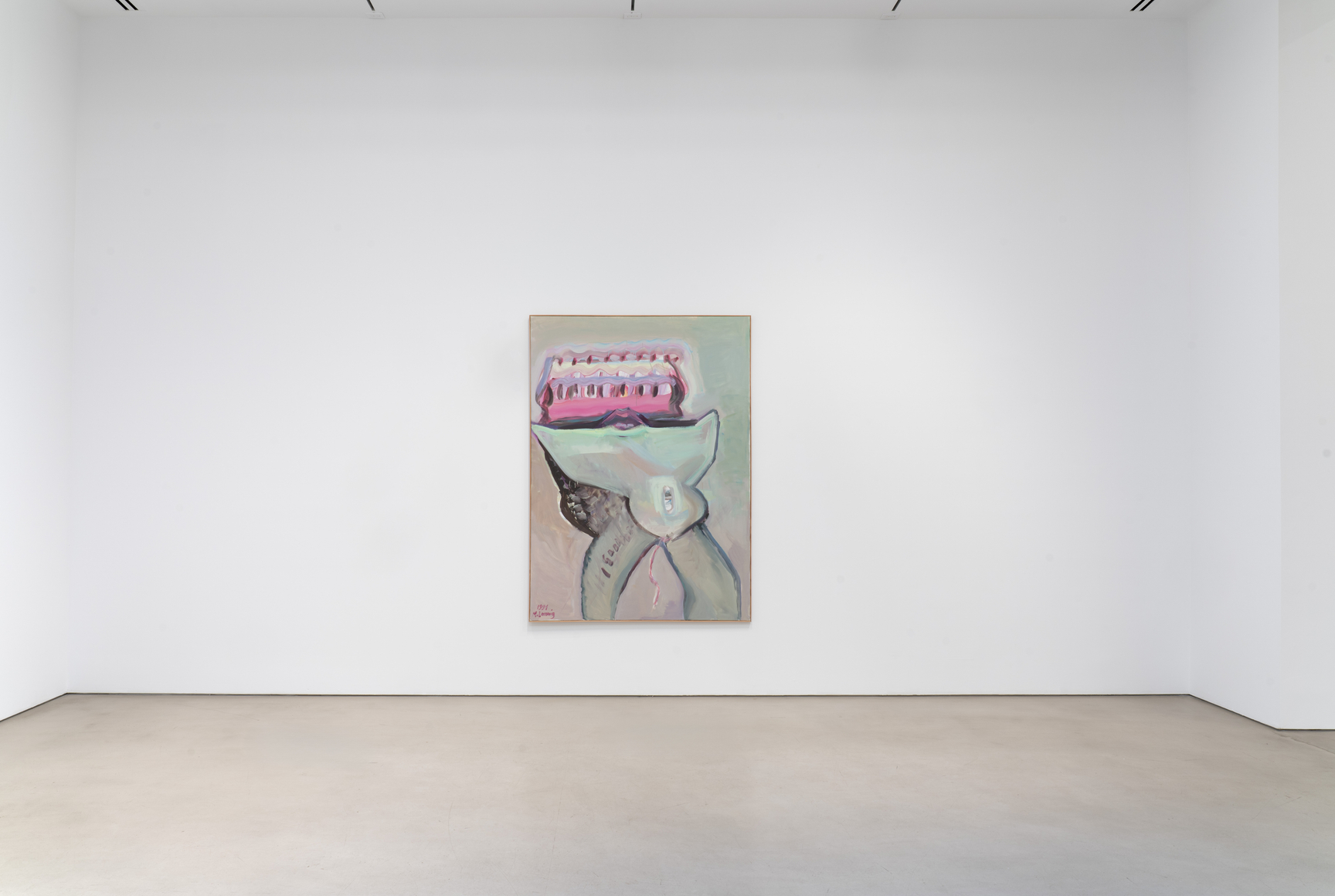
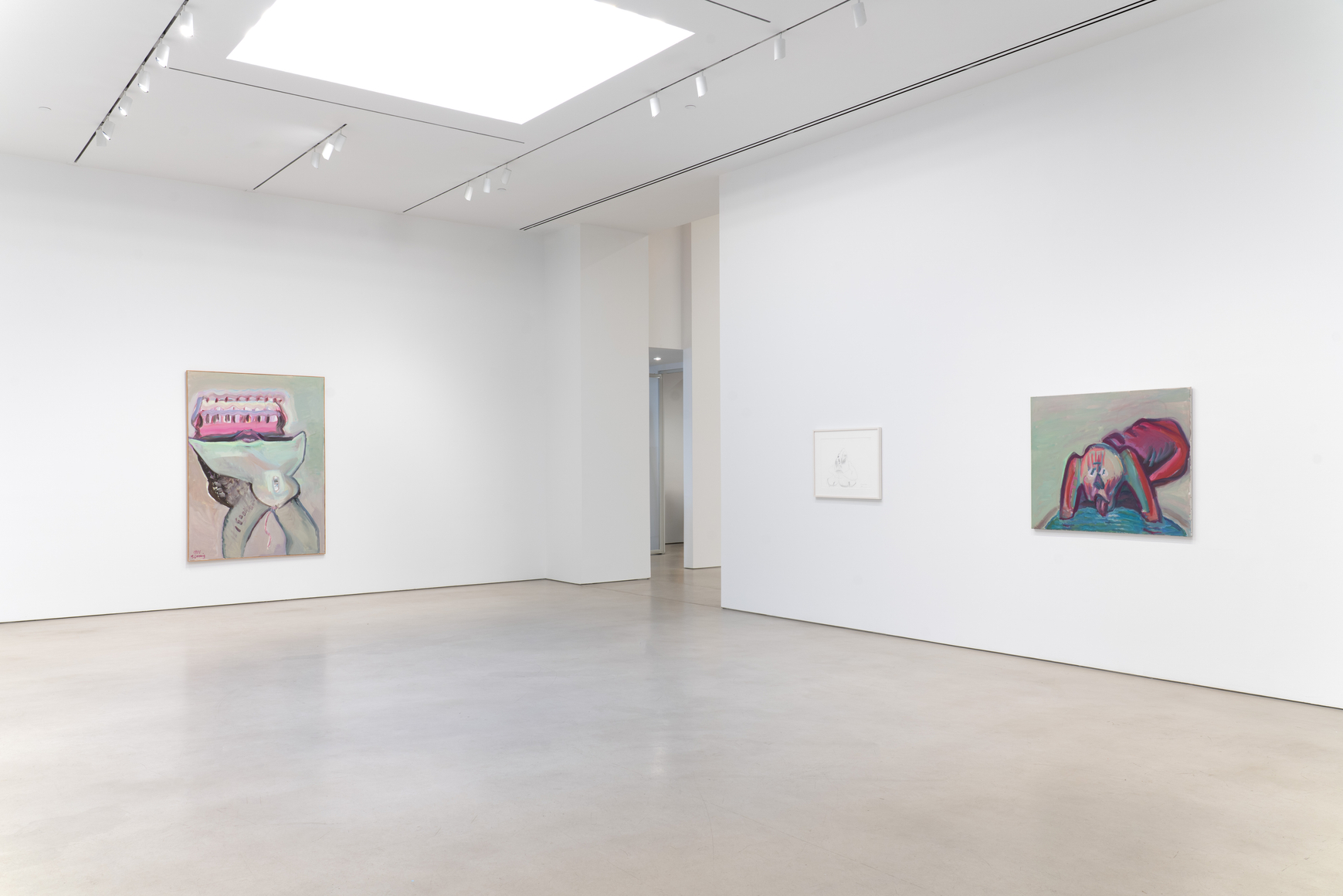
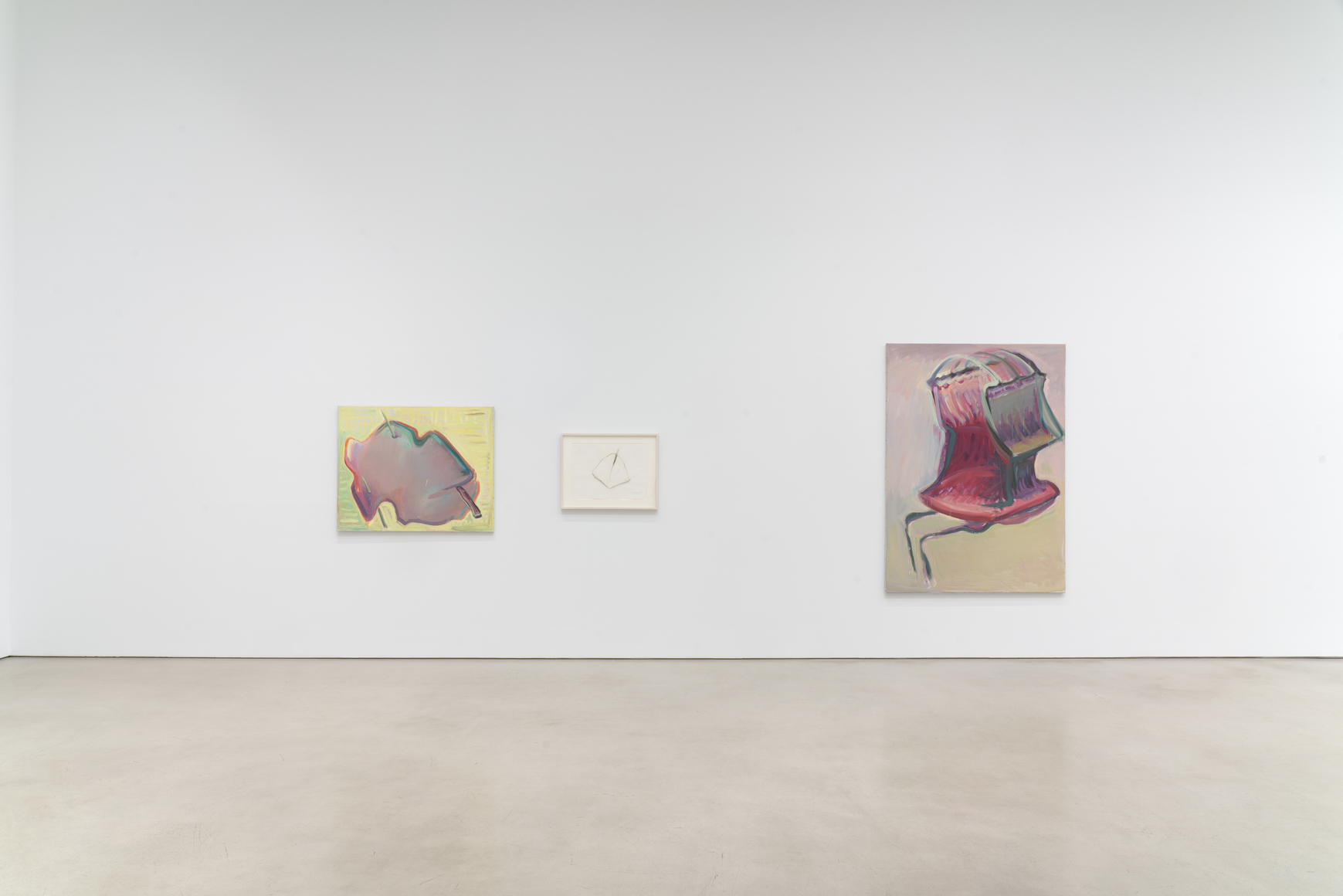
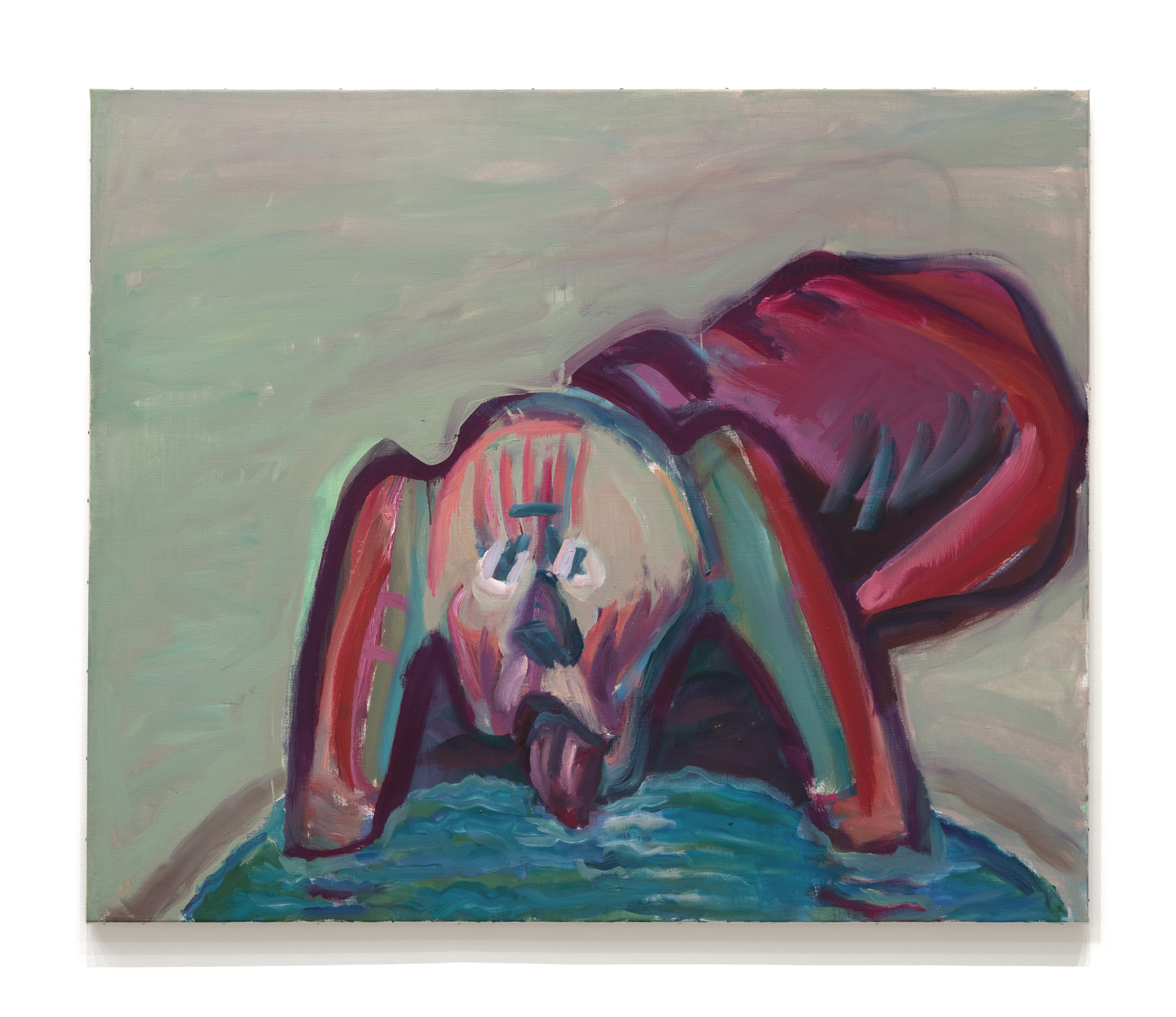
Durst (Thirst), 1985
Oil on canvas
39 1/2 x 47 3/8 in
100.3 x 120.2 cm
(ML 25/025)
© Maria Lassnig Foundation

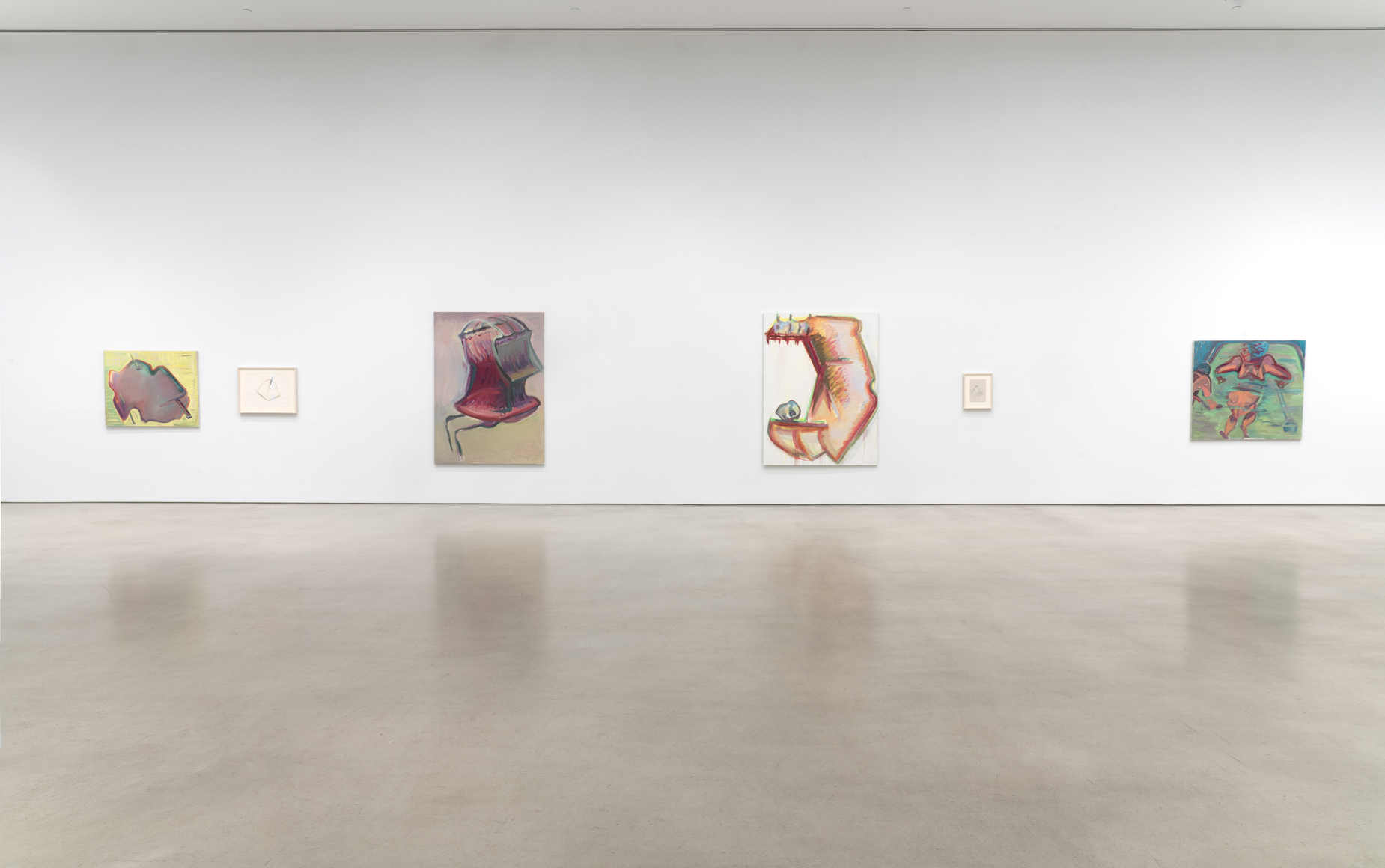
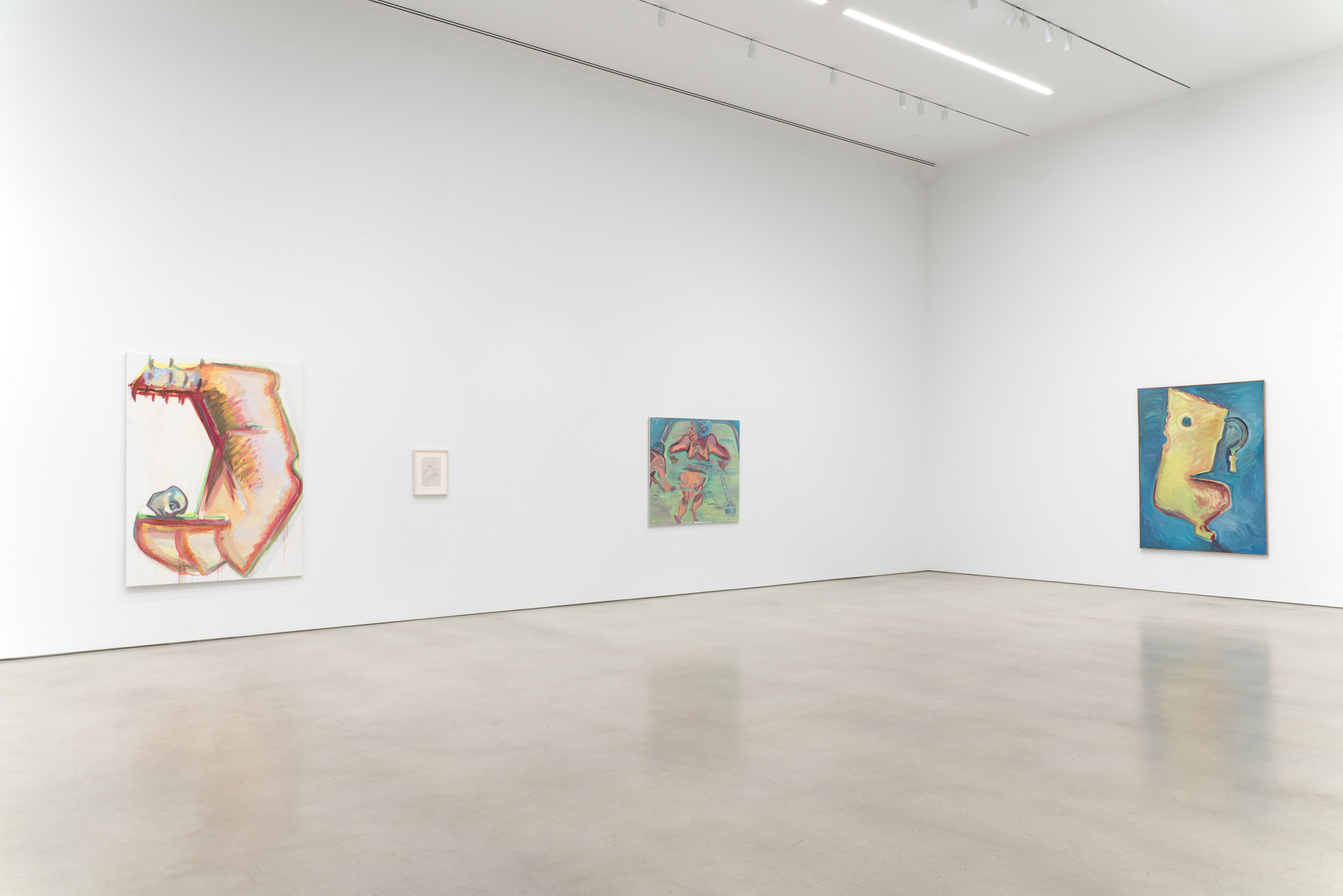
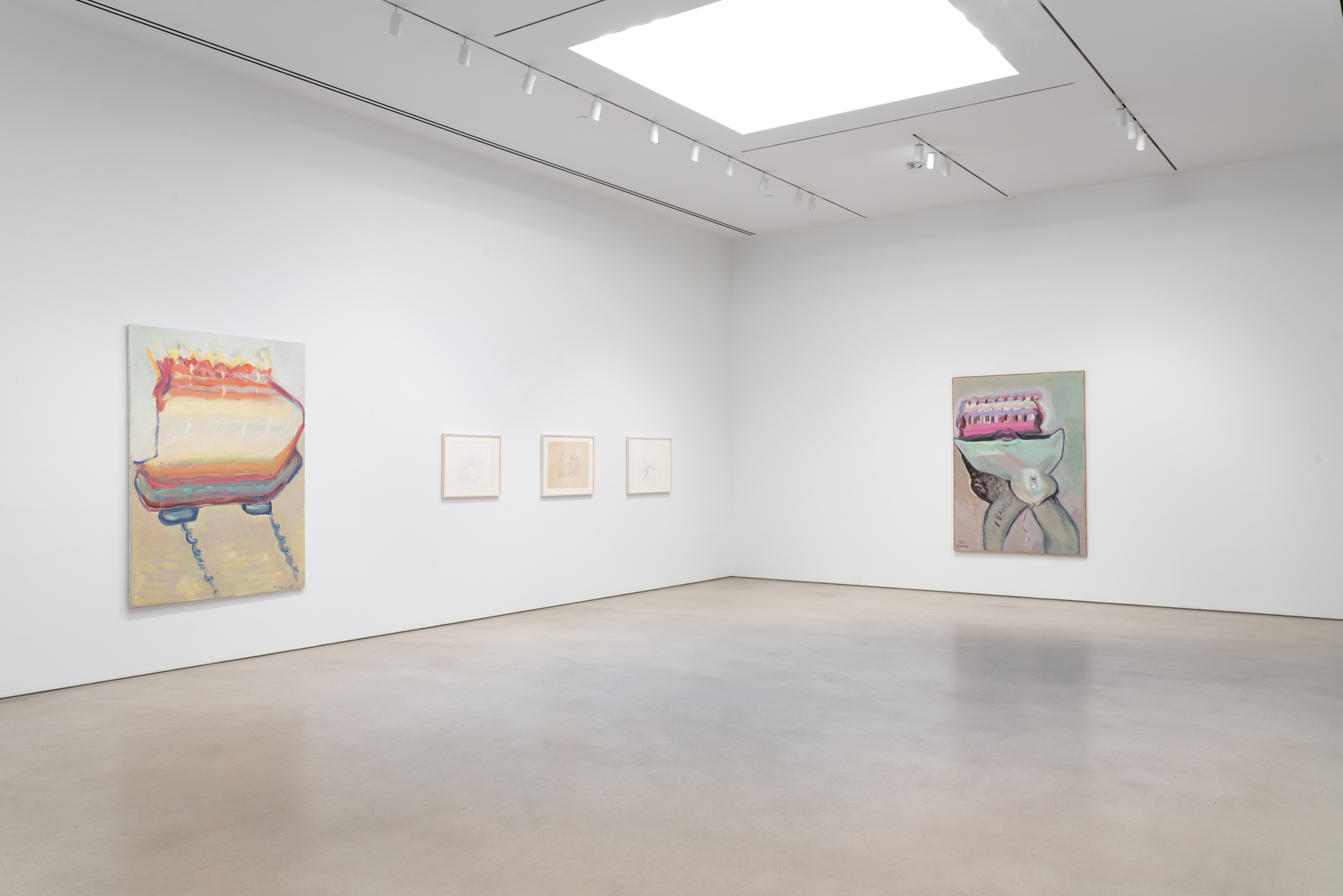
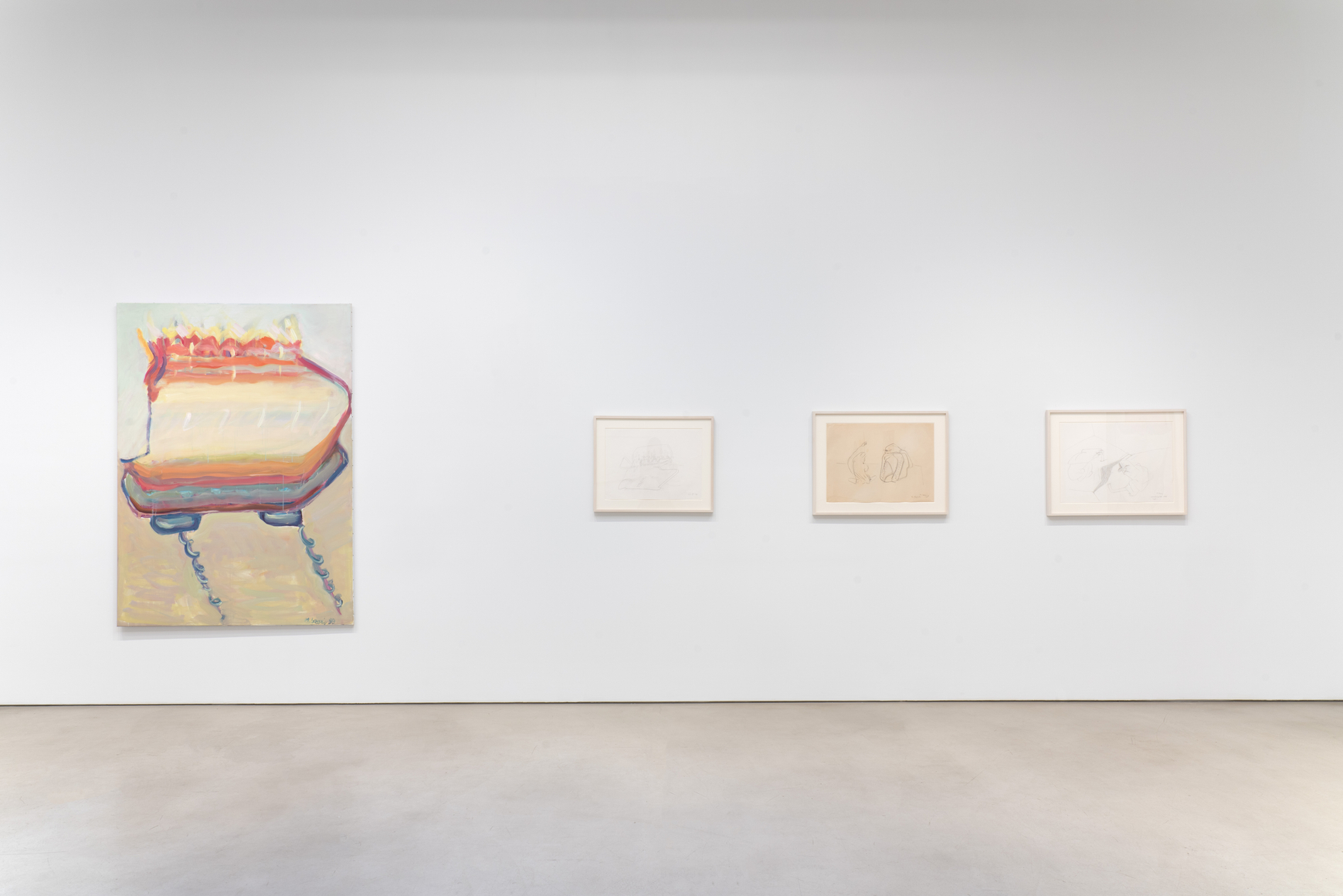
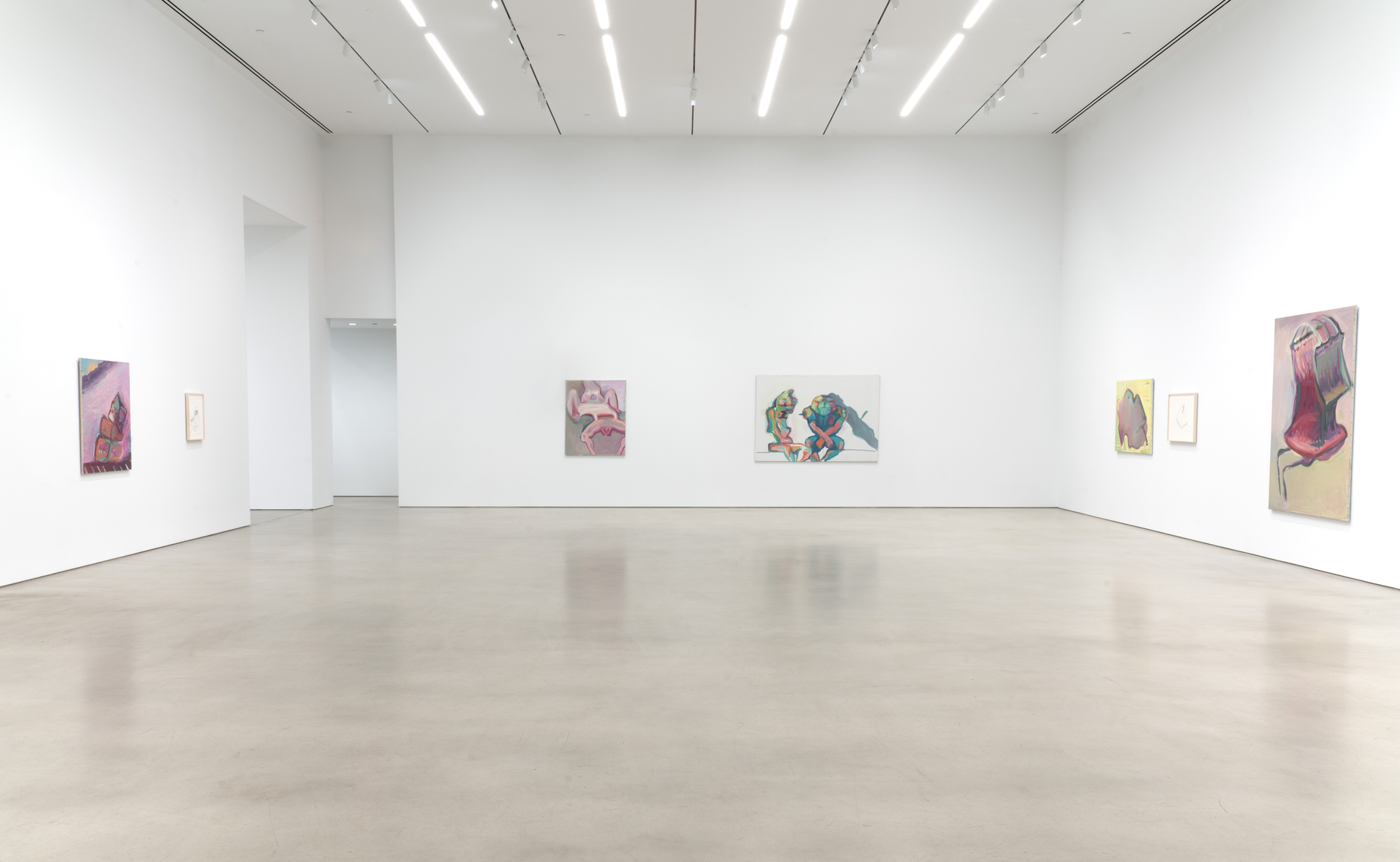
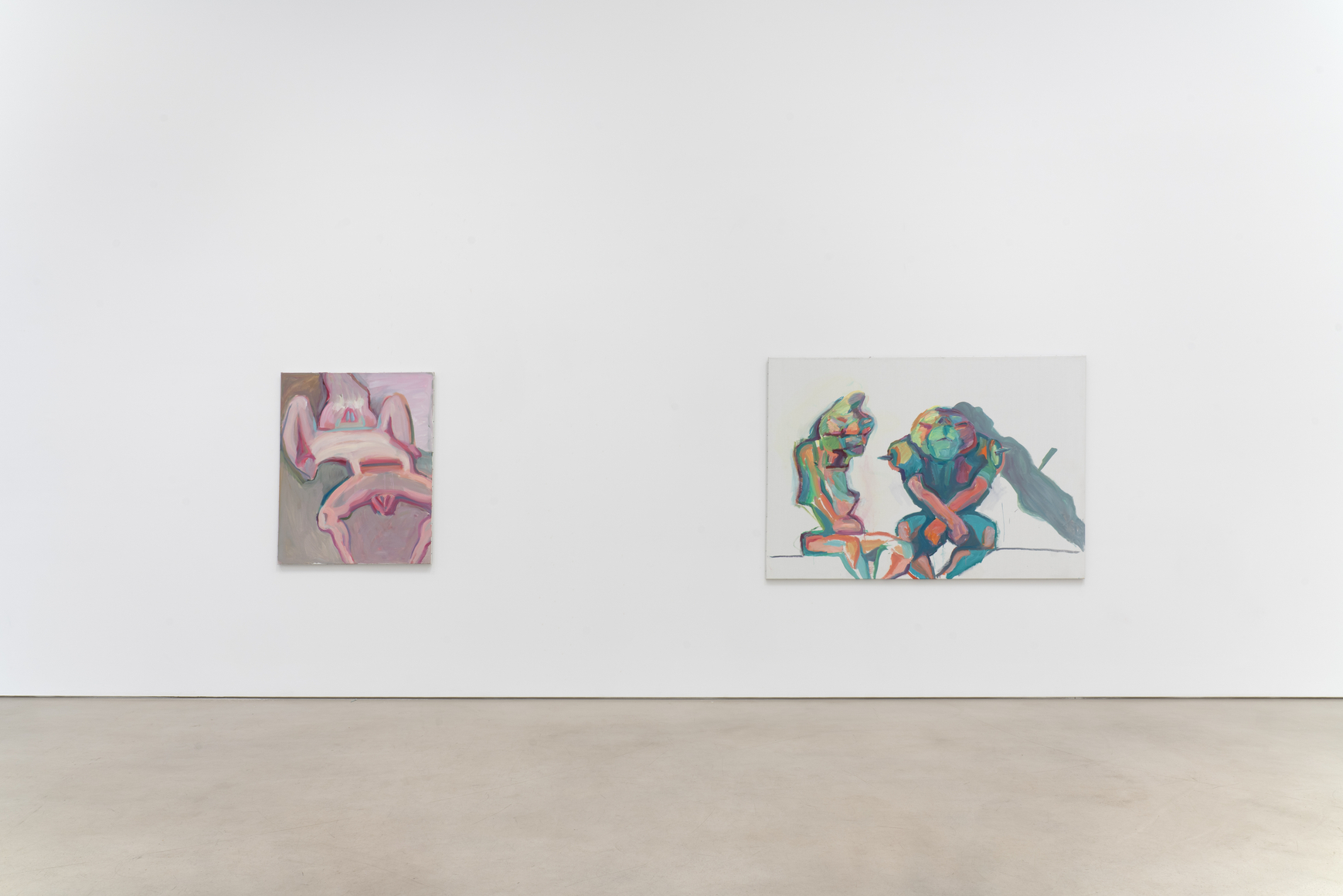
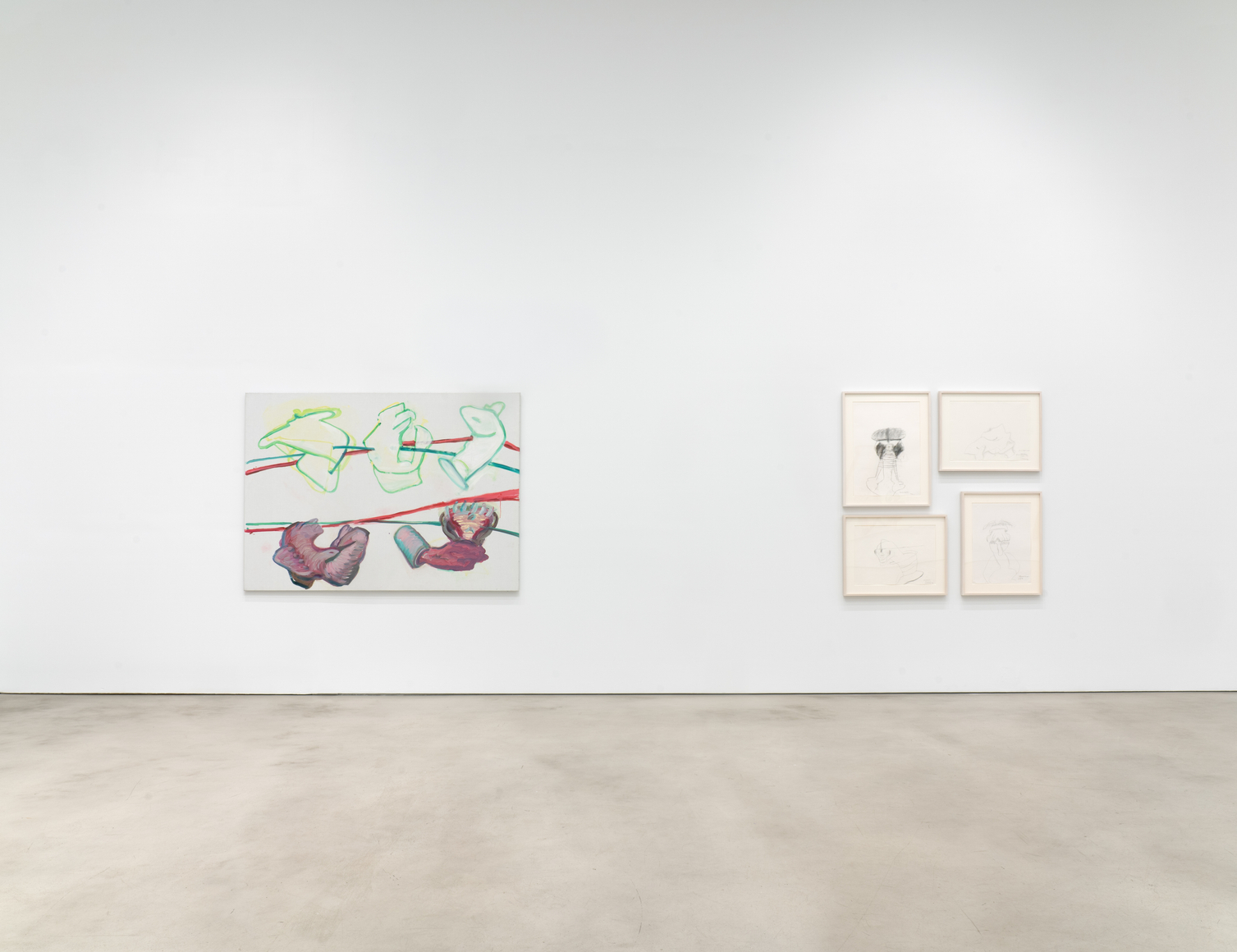
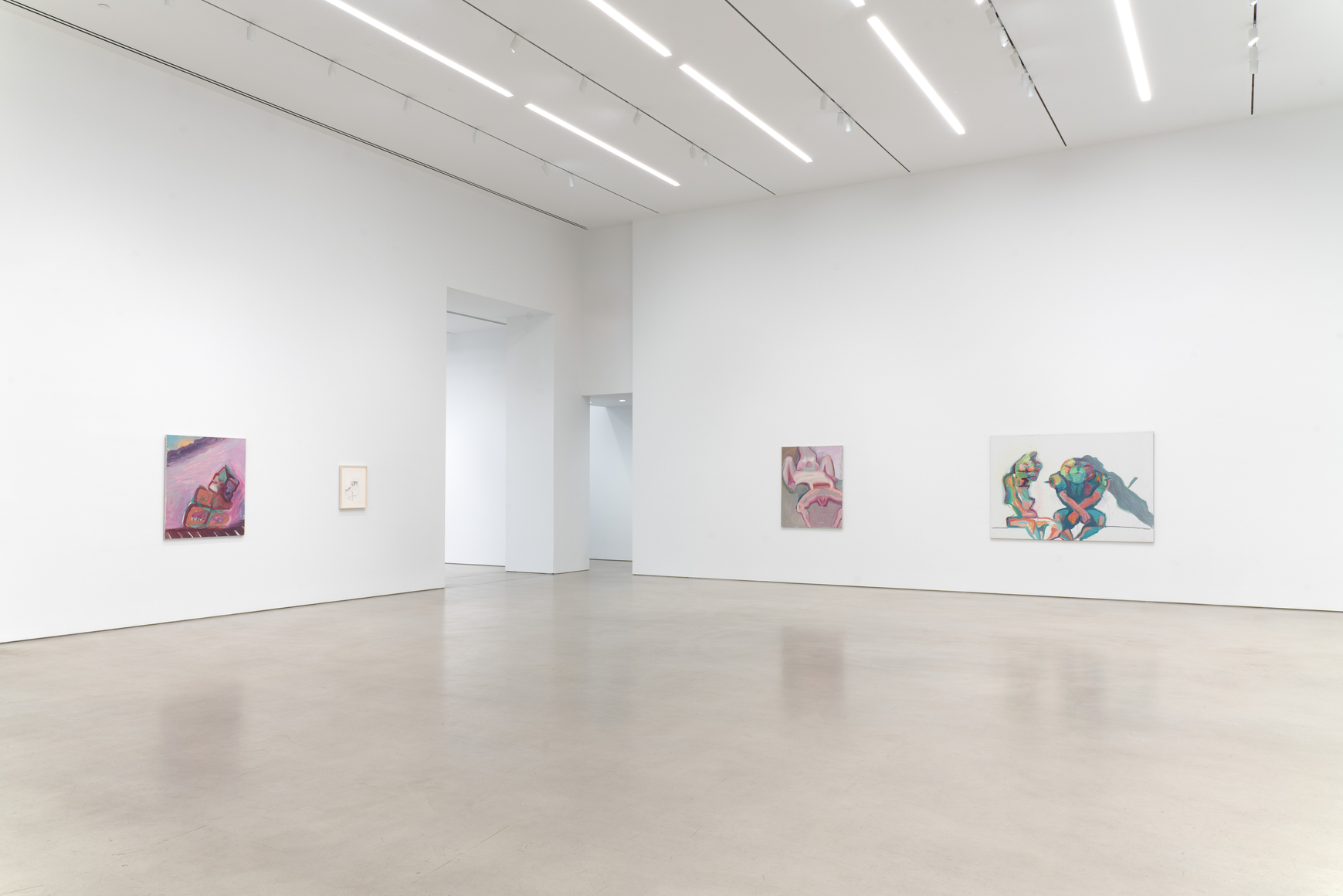
Installation view, Maria Lassnig, Petzel, 2026. © Maria Lassnig Foundation. Courtesy of the artist and Petzel.
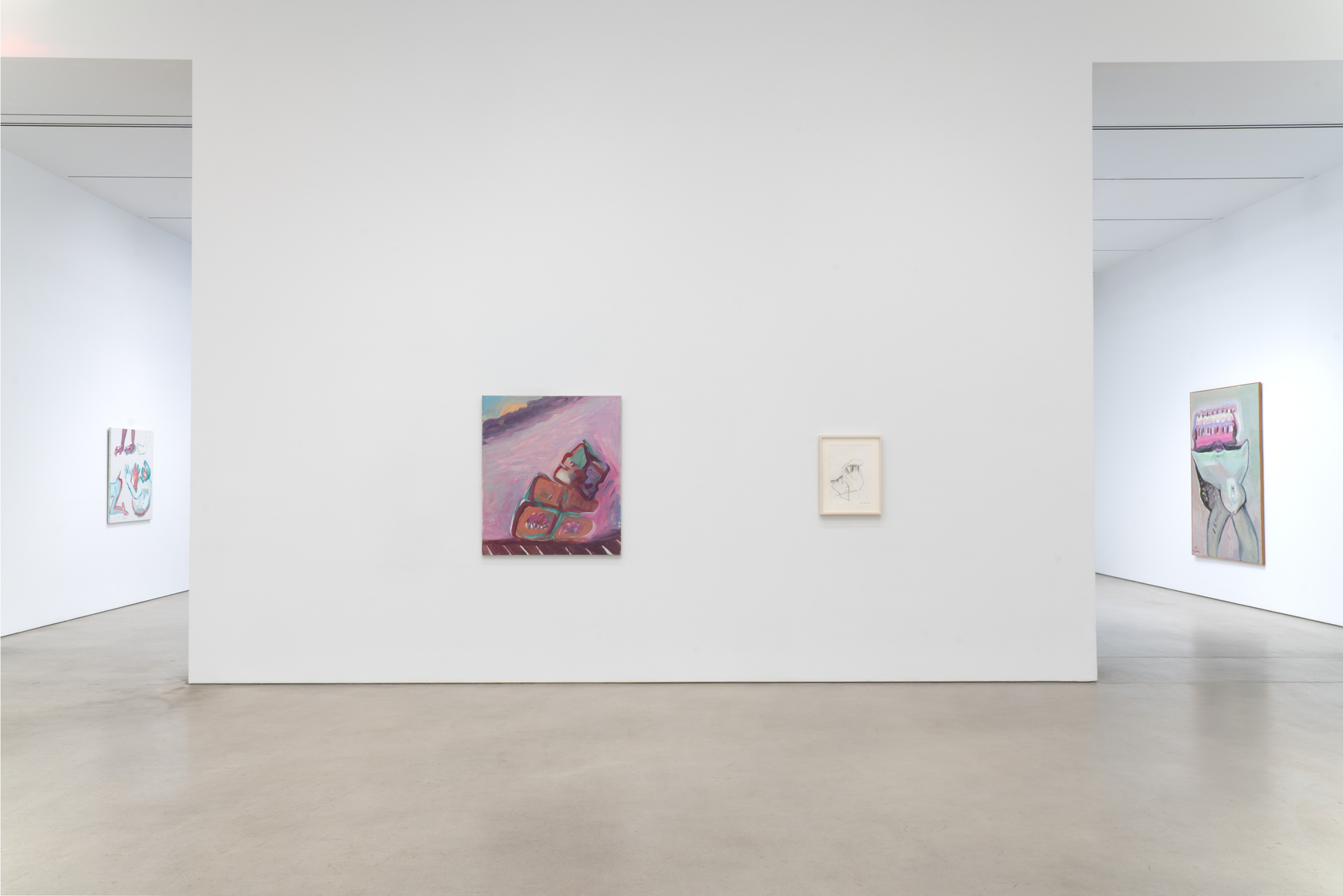
Installation view, Maria Lassnig, Petzel, 2026. © Maria Lassnig Foundation. Courtesy of the artist and Petzel.
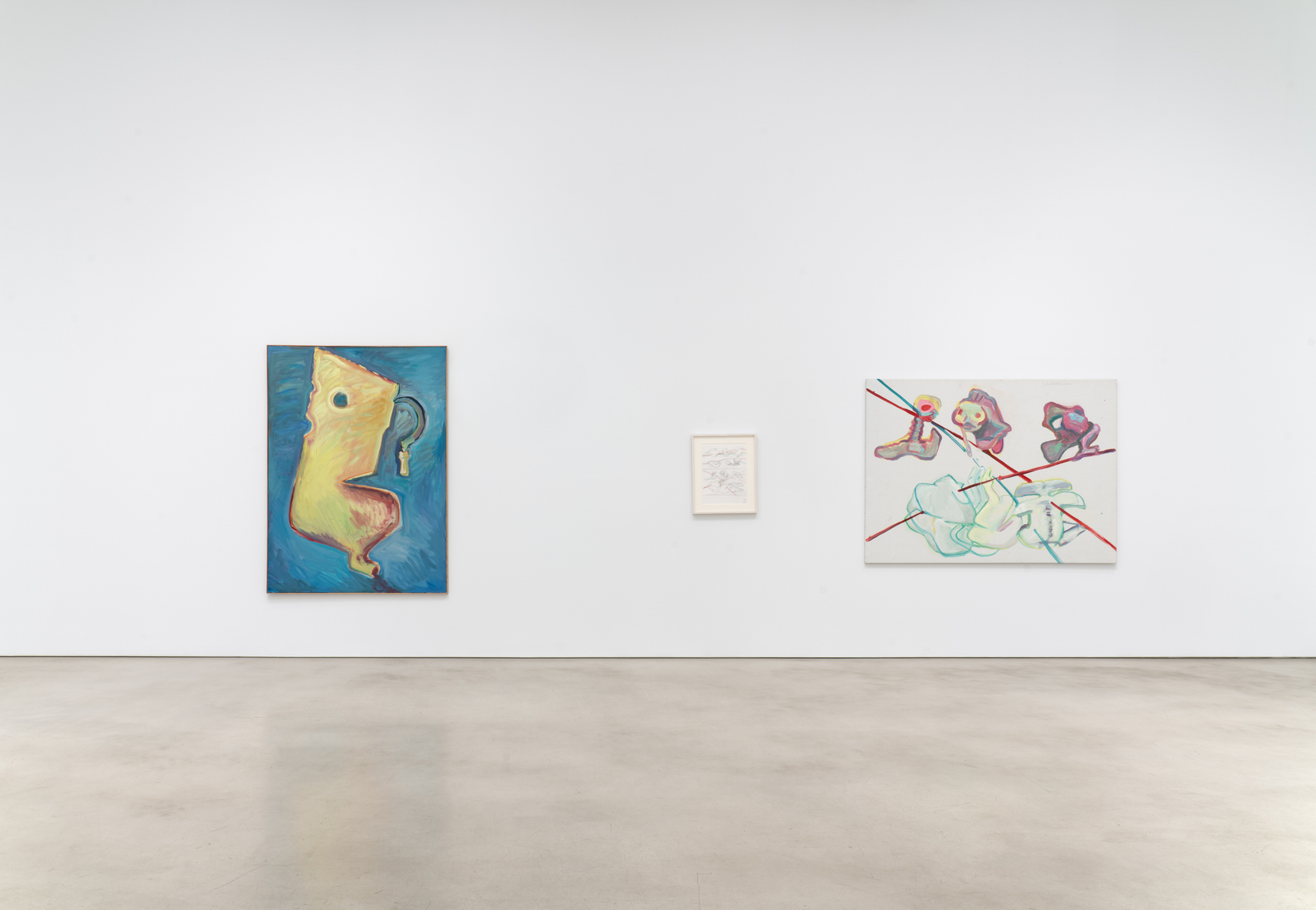
Installation view, Maria Lassnig, Petzel, 2026. © Maria Lassnig Foundation. Courtesy of the artist and Petzel.
Installation view, Maria Lassnig, Petzel, 2026. © Maria Lassnig Foundation. Courtesy of the artist and Petzel.
Installation view, Maria Lassnig, Petzel, 2026. © Maria Lassnig Foundation. Courtesy of the artist and Petzel.
Installation view, Maria Lassnig, Petzel, 2026. © Maria Lassnig Foundation. Courtesy of the artist and Petzel.
Installation view, Maria Lassnig, Petzel, 2026. © Maria Lassnig Foundation. Courtesy of the artist and Petzel.
Installation view, Maria Lassnig, Petzel, 2026. © Maria Lassnig Foundation. Courtesy of the artist and Petzel.
Installation view, Maria Lassnig, Petzel, 2026. © Maria Lassnig Foundation. Courtesy of the artist and Petzel.
Installation view, Maria Lassnig, Petzel, 2026. © Maria Lassnig Foundation. Courtesy of the artist and Petzel.
Installation view, Maria Lassnig, Petzel, 2026. © Maria Lassnig Foundation. Courtesy of the artist and Petzel.
Installation view, Maria Lassnig, Petzel, 2026. © Maria Lassnig Foundation. Courtesy of the artist and Petzel.
Installation view, Maria Lassnig, Petzel, 2026. © Maria Lassnig Foundation. Courtesy of the artist and Petzel.
"Figuration comes about almost automatically, because in my art I start first and foremost with myself.” – Maria Lassnig 1
Petzel is pleased to present an exhibition of paintings and drawings by Austrian artist Maria Lassnig, in collaboration with the Maria Lassnig Foundation, Vienna, on view from March 12 through April 25, 2026. The exhibition surveys the later stages of Lassnig’s career, spanning from the late 1980s through the early 2000s, and brings together a focused selection of works that reflect her sustained engagement with the body as a site of perception, conflict, and existential inquiry.
Continuing Petzel’s long-standing commitment to Lassnig’s work, this presentation follows the gallery’s exhibitions Maria Lassnig: The Paris Years, 1960–68 and Woman Power: Maria Lassnig in New York, 1968–1980. In contrast to those earlier examinations of her formative years abroad, the paintings and drawings in this exhibition turn to Lassnig’s later years in Vienna, where she served as a professor at the University of Applied Arts starting in 1980.
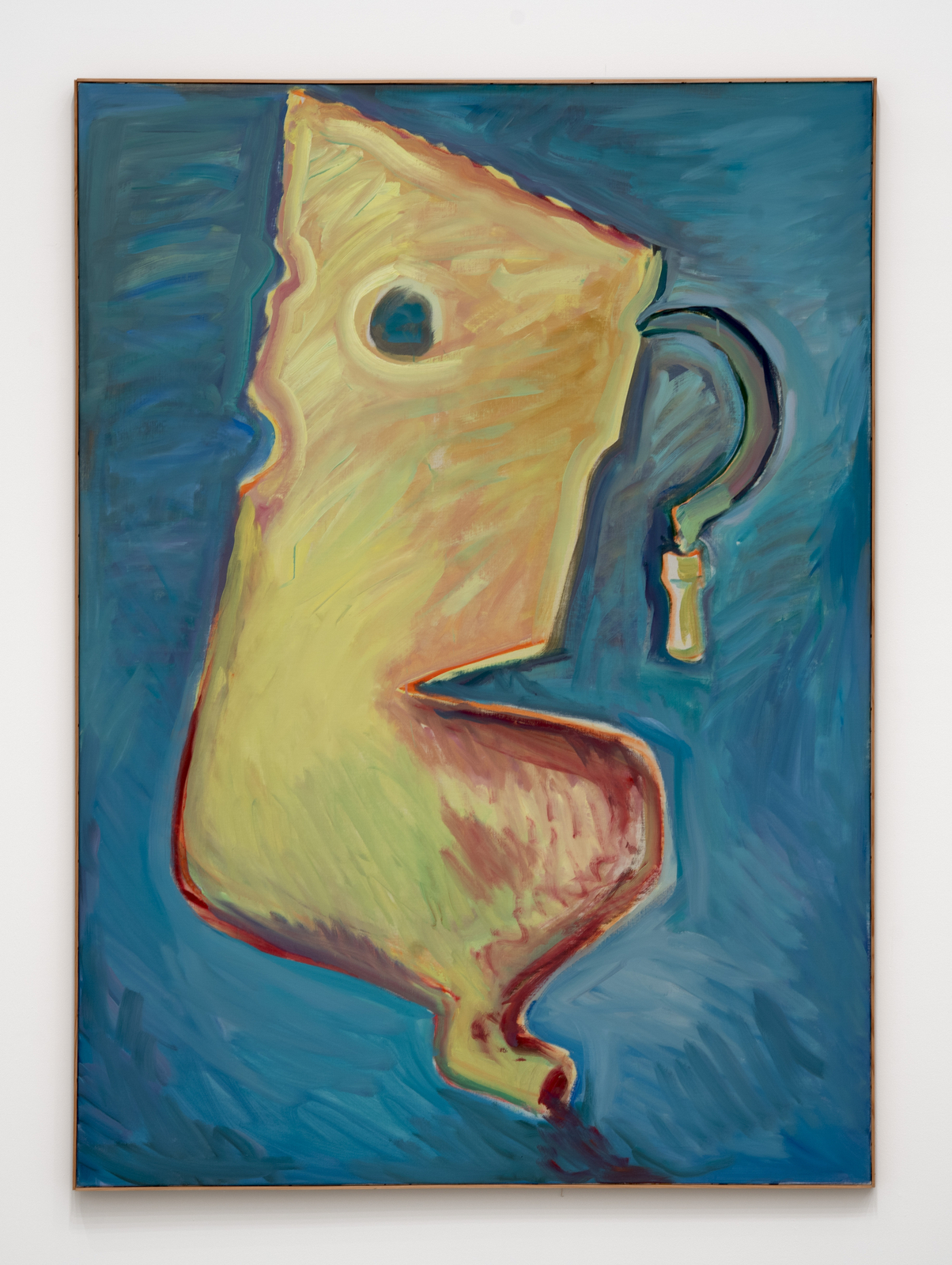
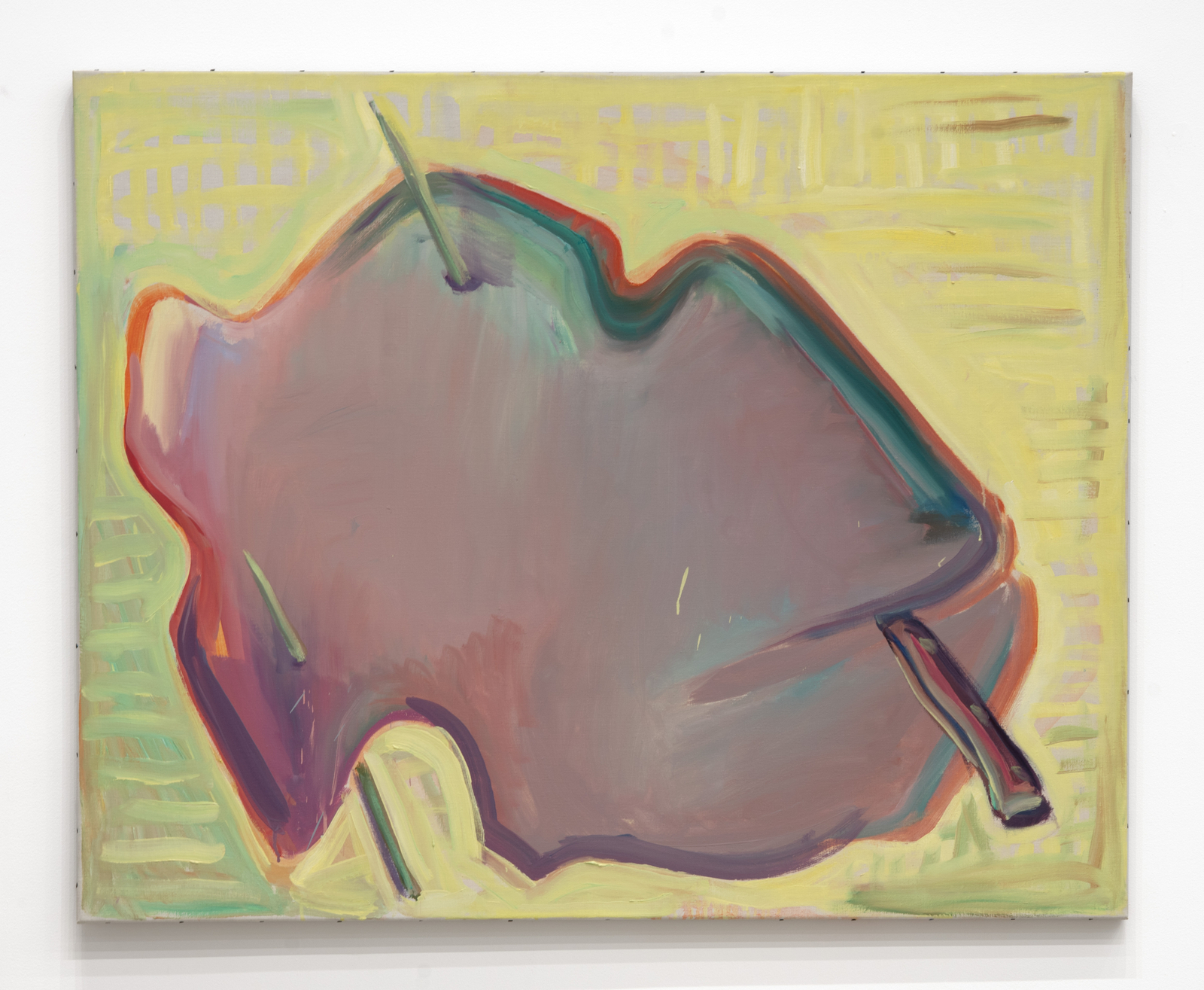
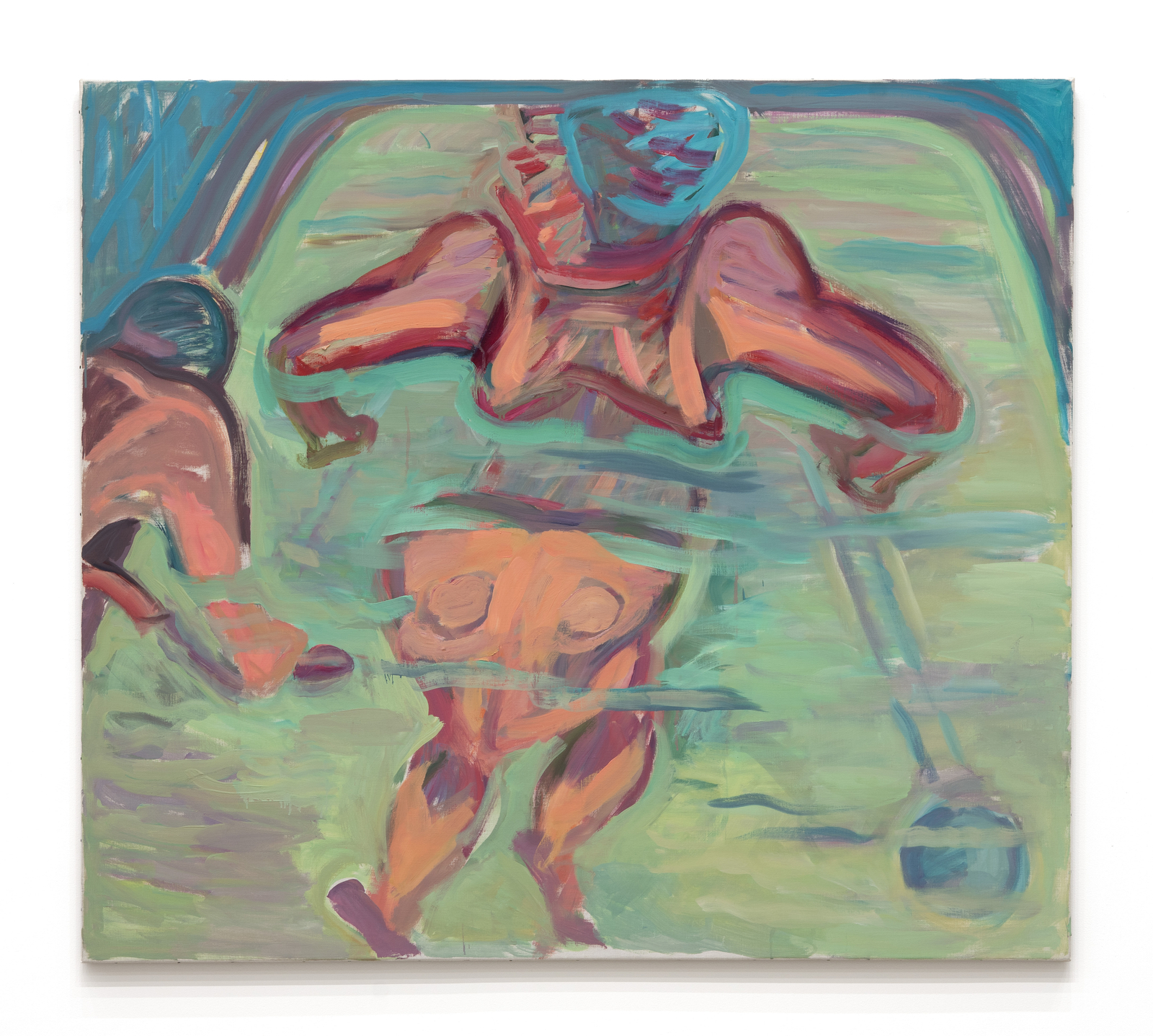
Deeply committed to her students, Lassnig found teaching demanding, requiring a shift from the studio’s solitude to the classroom’s performative dynamics. Many works from this time reflect these psychological pressures. In Durst (Thirst) (1985) and Unterwassertherapie (Underwater Therapy) (1986), she staged vulnerable, often allegorical scenarios where anthropomorphic figures appear endangered, submerged, or suspended in physical and psychic tension. Using her well-known “body awareness” painting, Lassnig painted bodily sensations as lived and felt. The degree to which visible reality informed the work varied from image to image, from phase to phase.
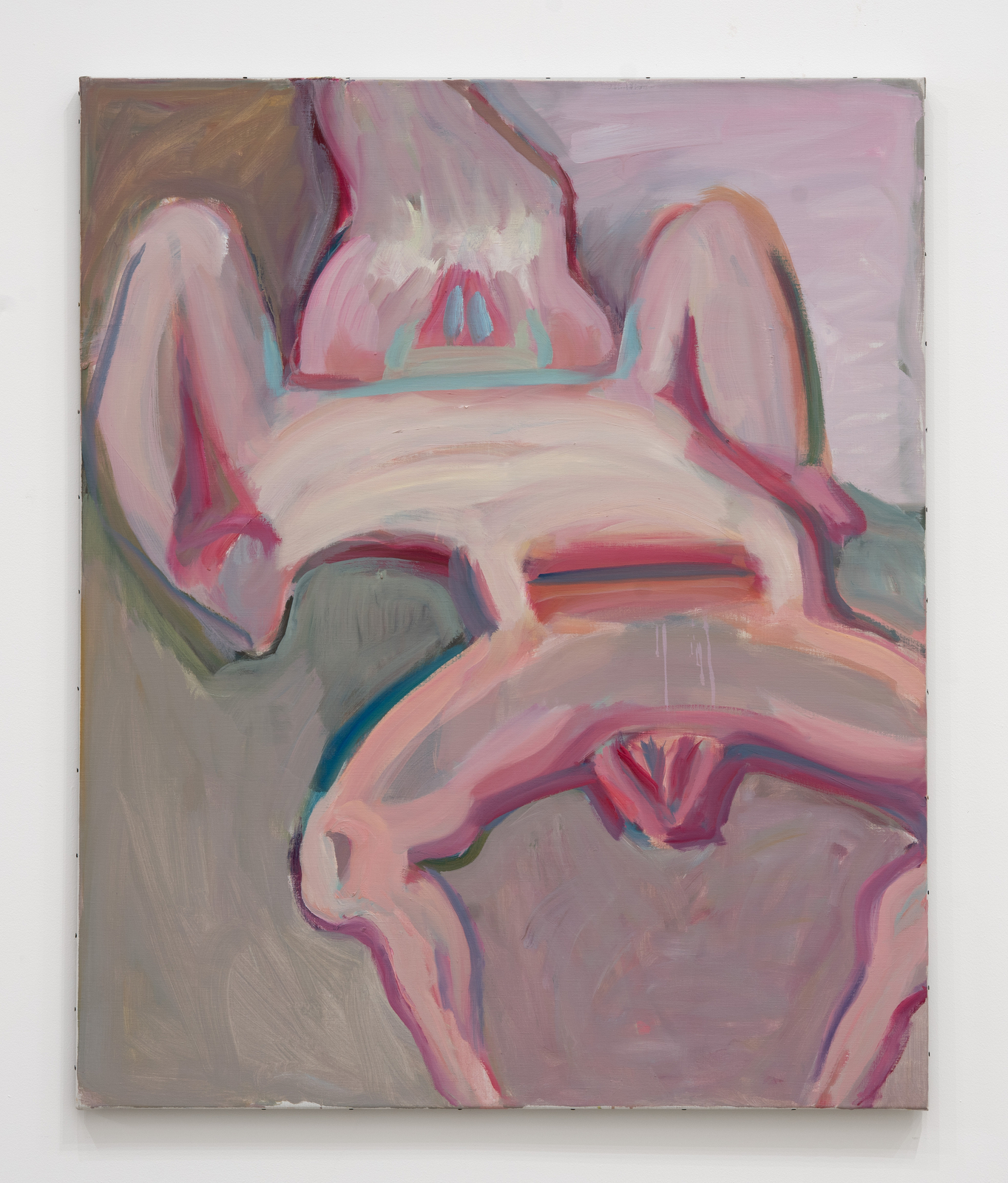
Following her retirement from teaching in 1989, Lassnig entered an immensely productive phase. Often working on multiple series at once in what she called “channel hopping,” developing a body of work that engaged with scientific phenomena and technology (including science fiction). In Be-Ziehungen (“Re-lations”), she explored the communicative and ‘interpersonal’ potential of a line. Soon after, Lassnig’s Drastic Paintings marked a subtle departure from the ambivalence of her “body awareness” painting, embracing a more realist, direct, and confrontational mode—both in subject matter and in formal articulation.
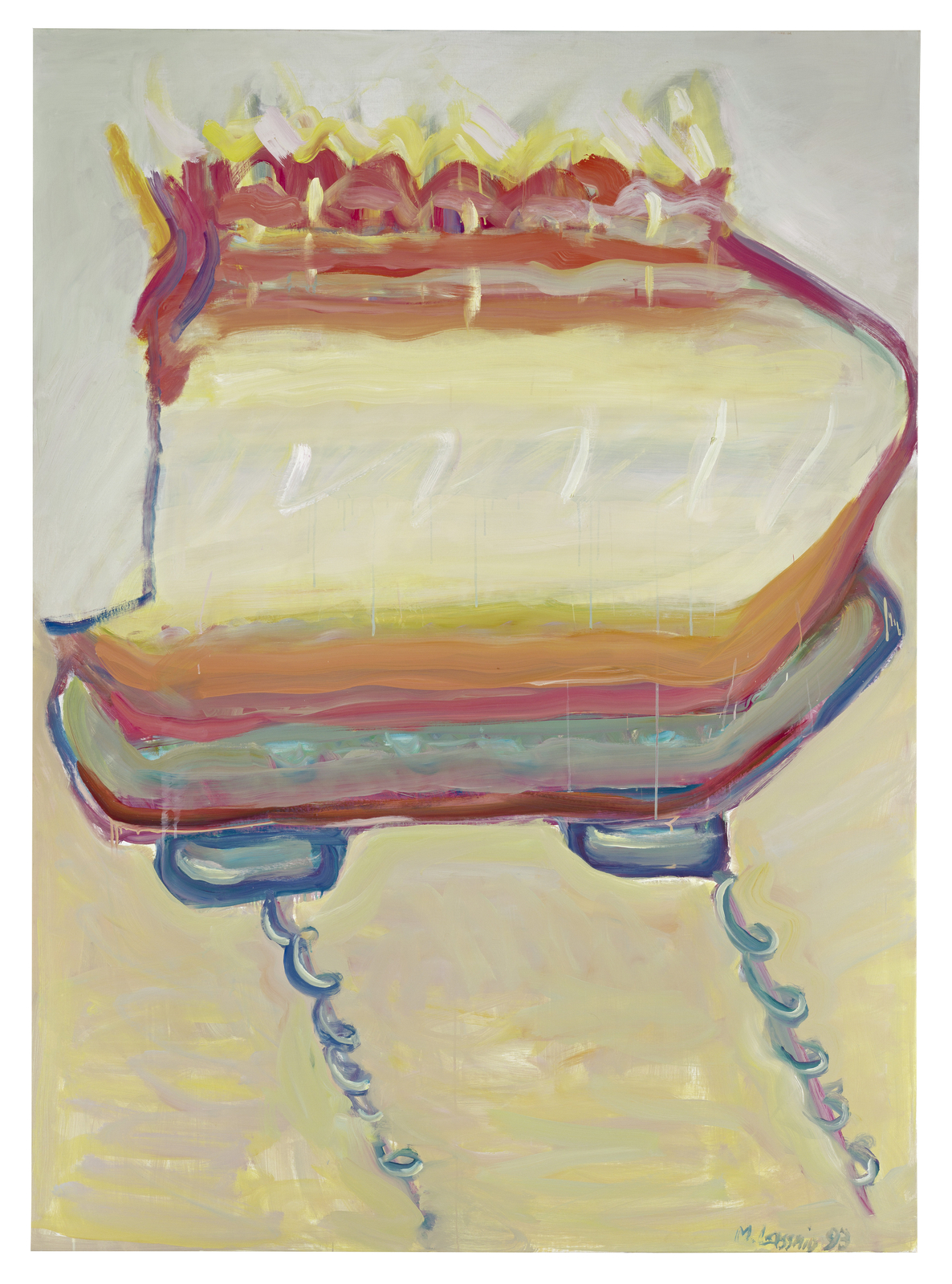
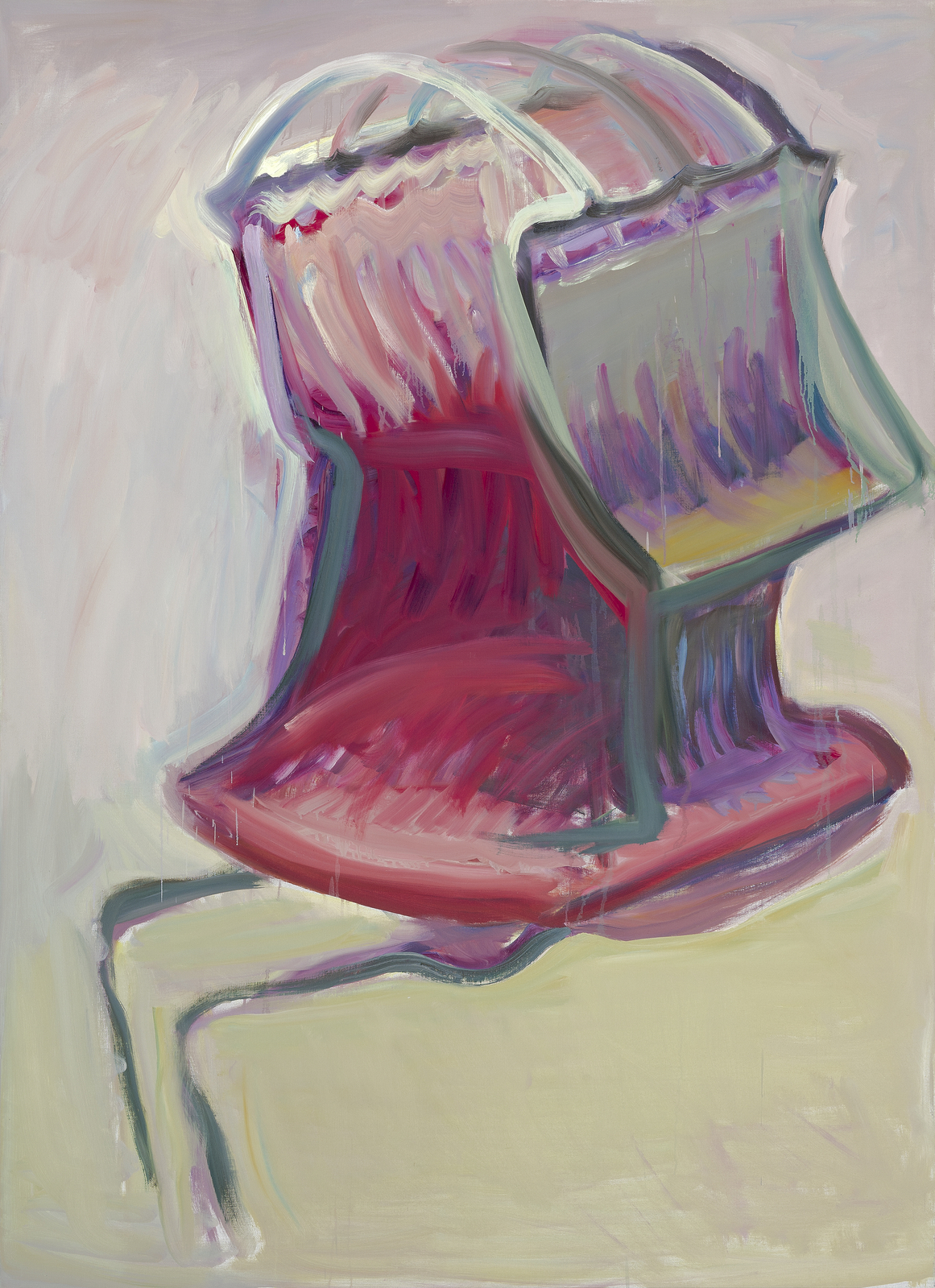
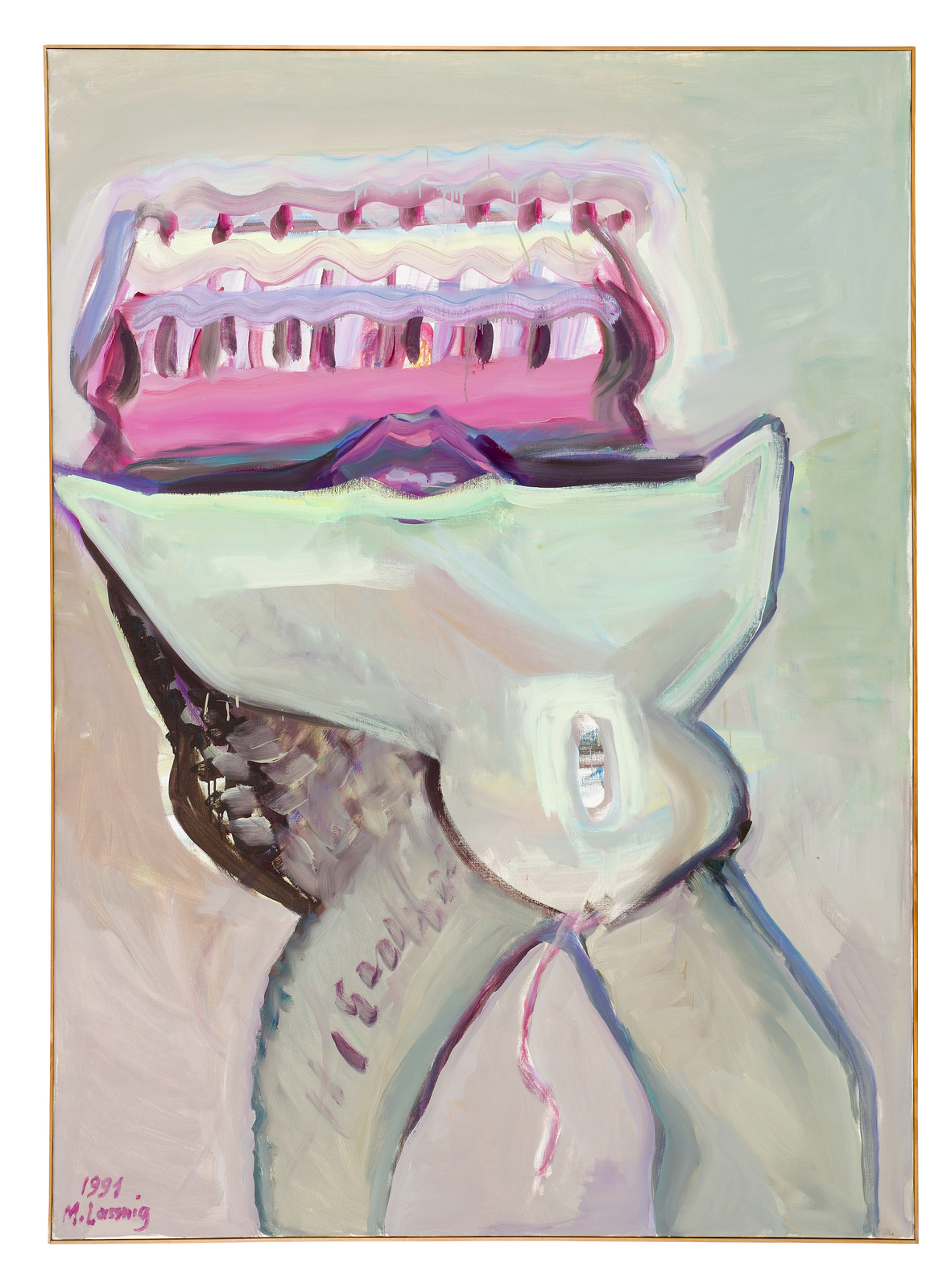
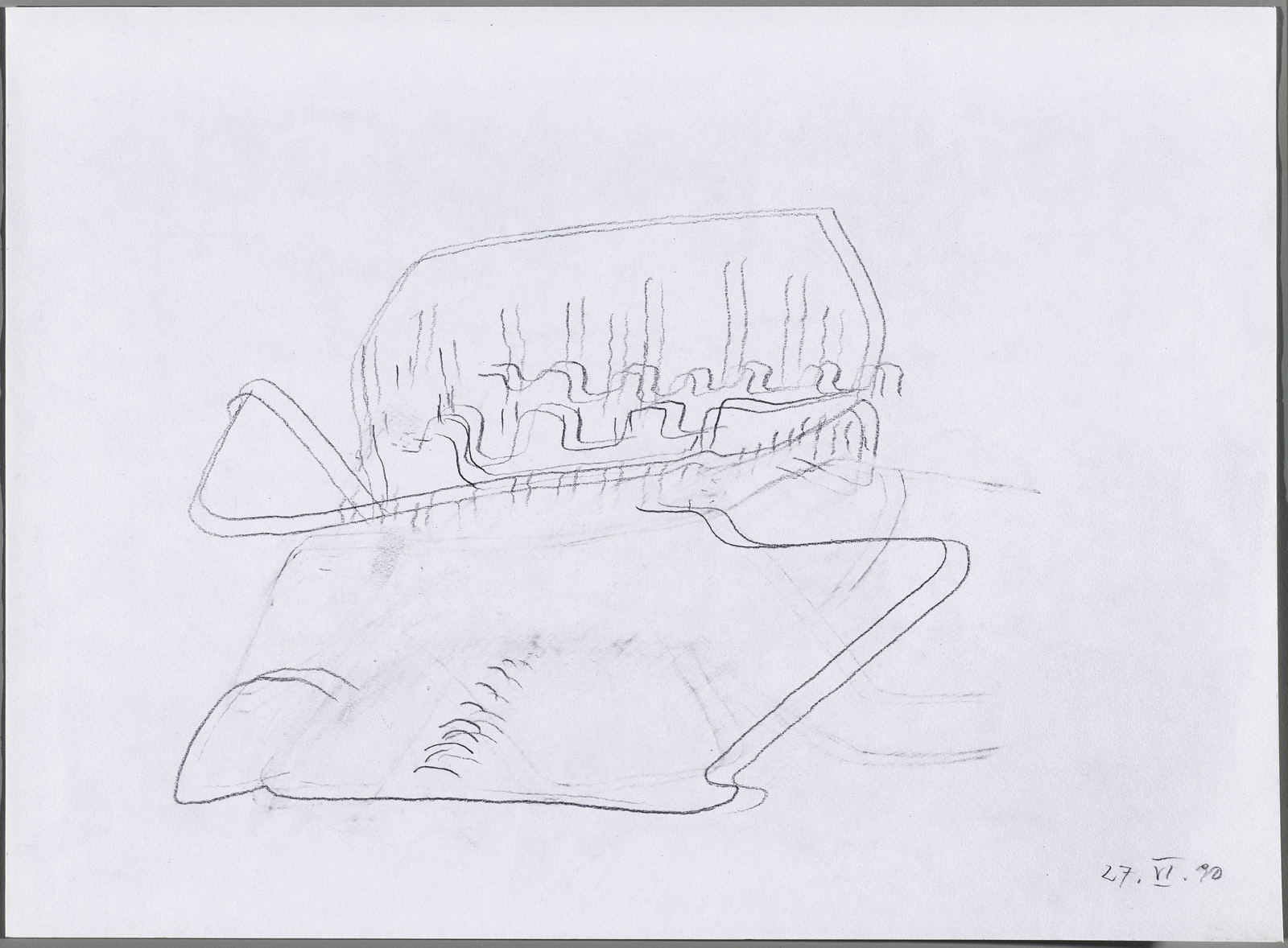
In the 1990s, Lassnig became interested in visualizing electromagnetic forces, brain waves, and neural pathways. “How far does a body extend electrically—and which parts of it participate?,”2 she asked. “The field of vision turns into a field of light; vibrations along the surface inscribe themselves as boundaries and meridians on the globe-like shell of the body. These self-portraits as electrical machines are but one among many ways of articulating body awareness.”3 In works such as Electricity I (1991) and Lichtboot (Lightboat) (1993), her body awareness shifts from isolated body parts to networks of nerves, currents, and invisible energies coursing through the figure.
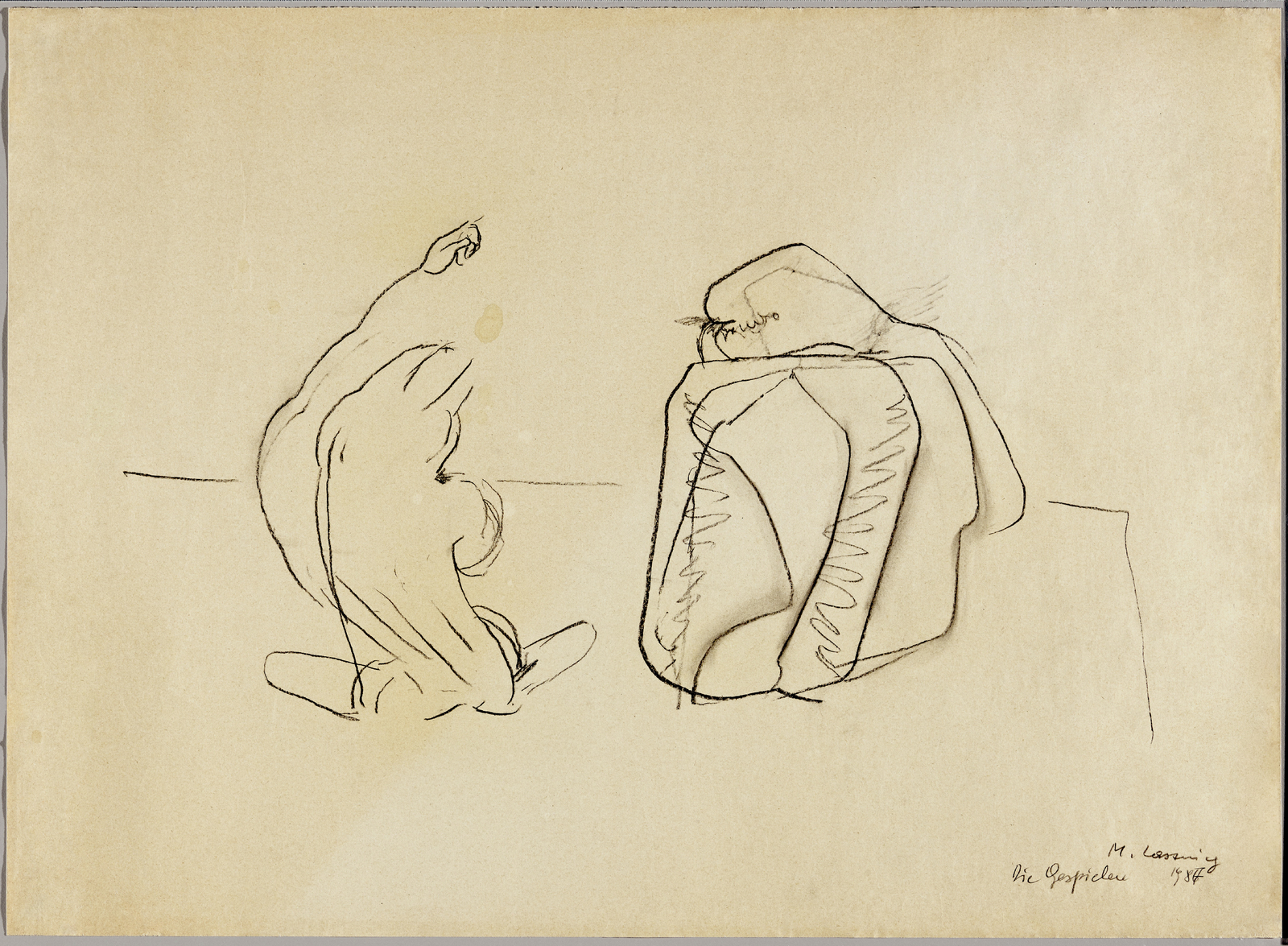
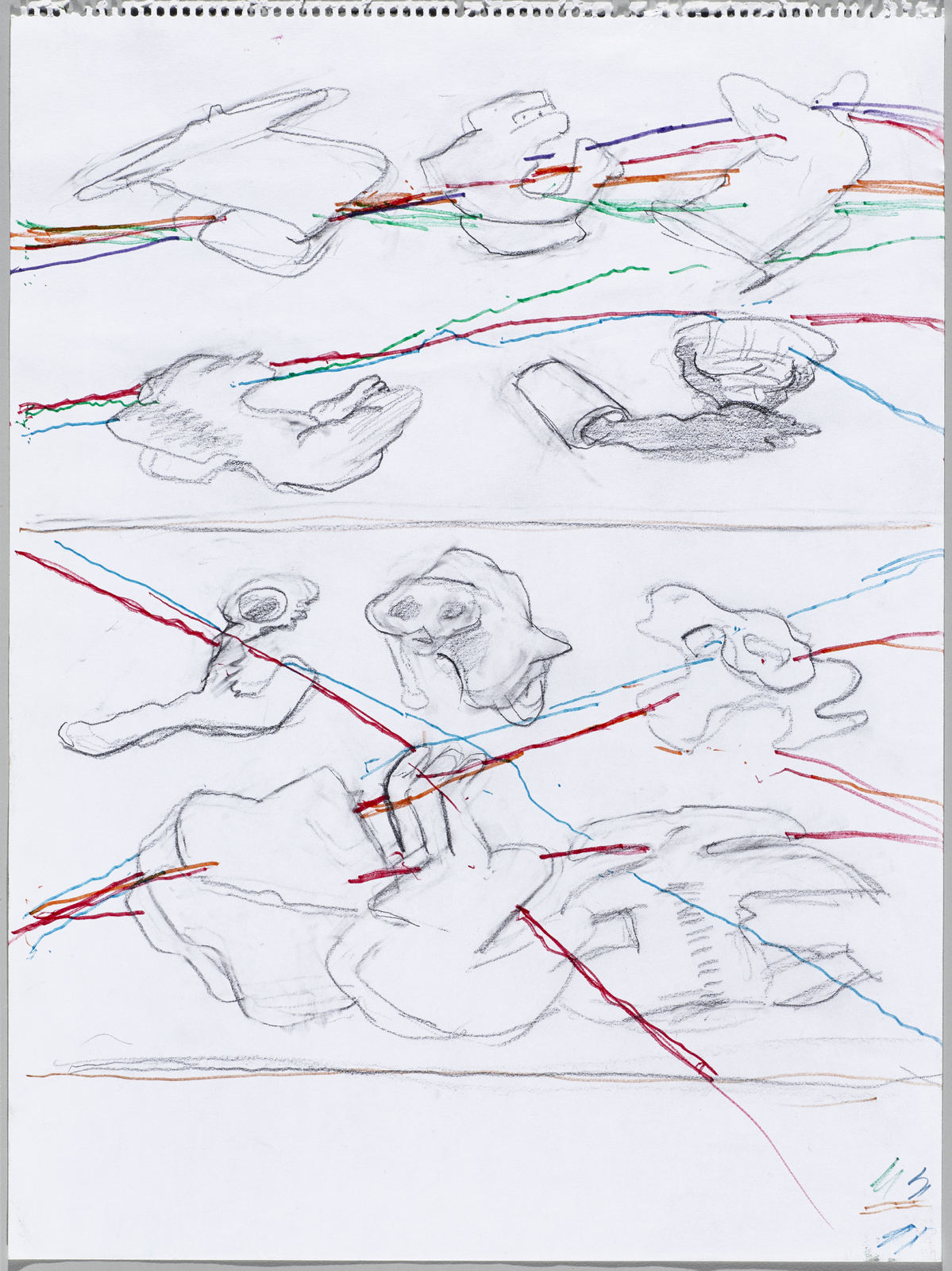
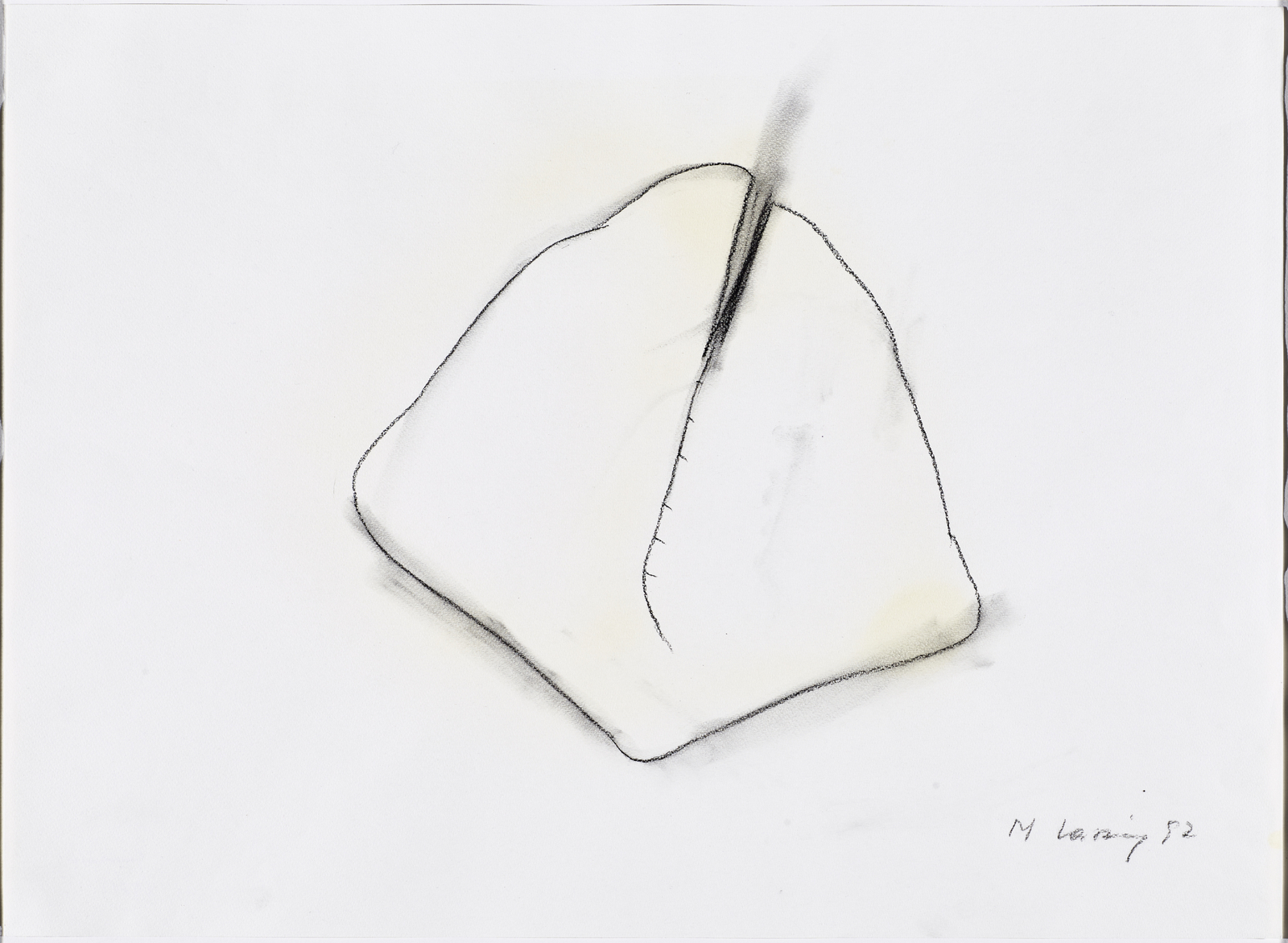
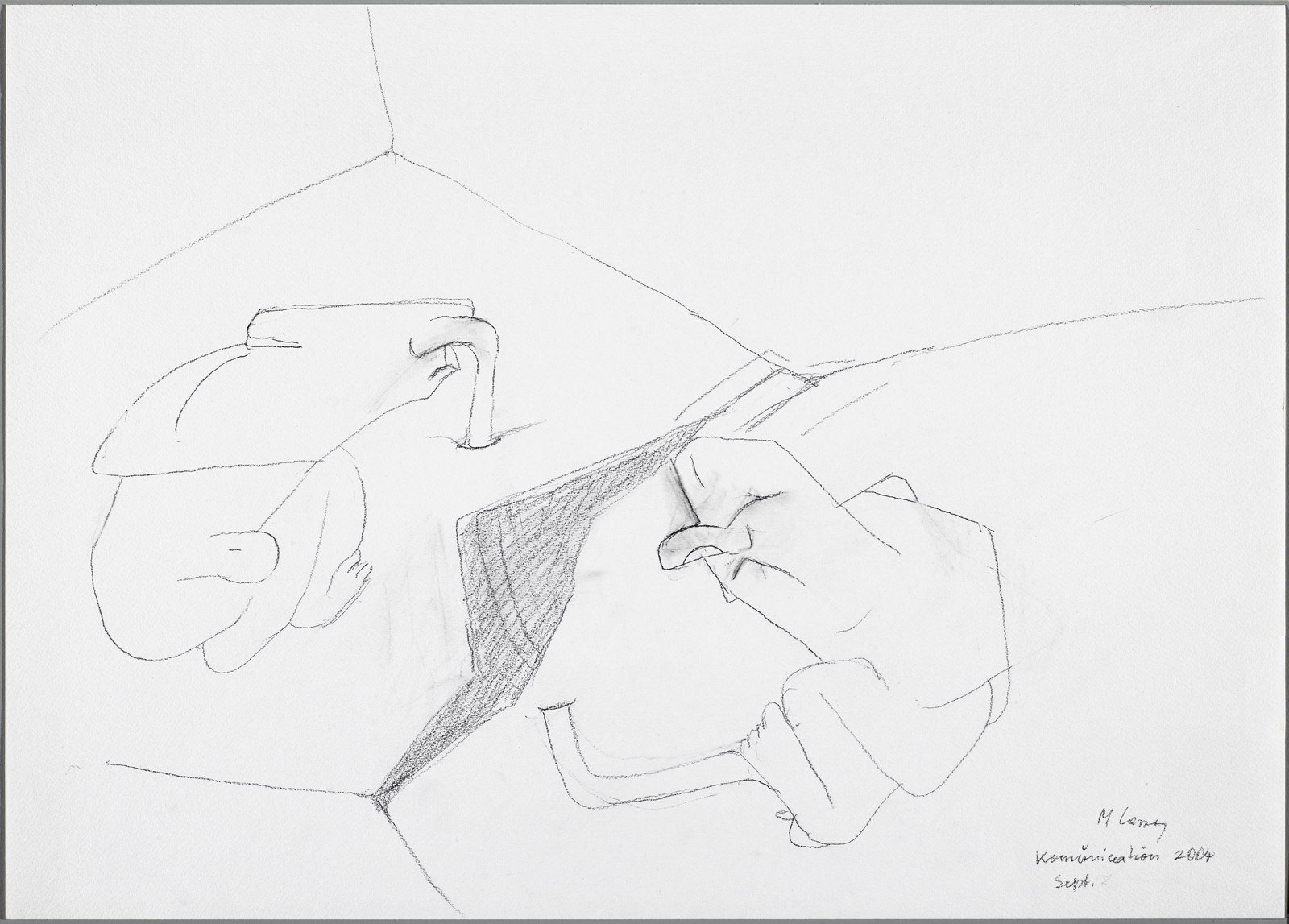
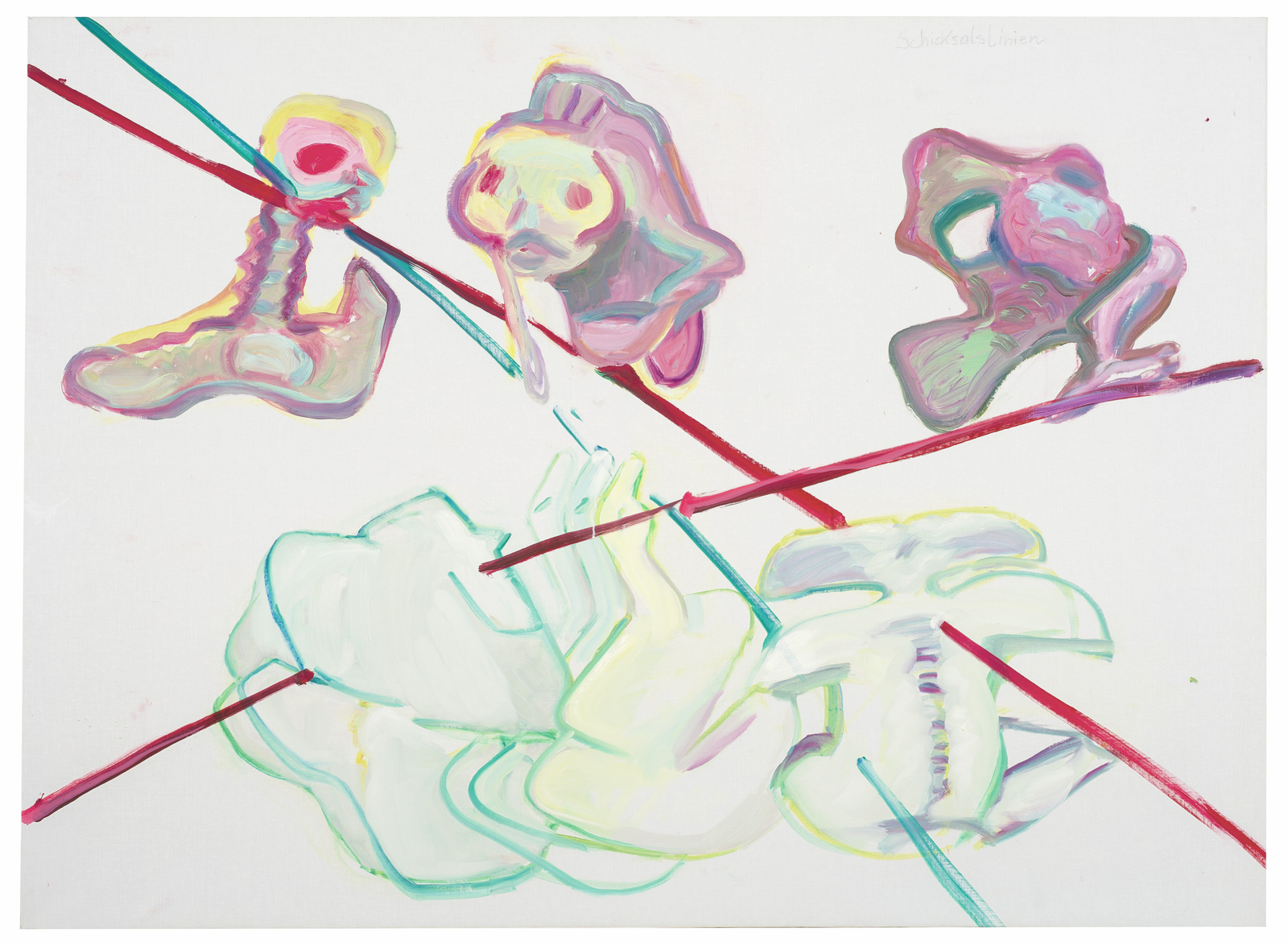
Concurrently, Lassnig created her Be-Ziehungen series, a linguistic play that can be translated as “Re-lations.” Figures appear bound, entangled, or tethered, rendered against sparse grounds with an economy of line and heightened expressivity. These works offer incisive and at times darkly sensual reflections on intimacy and attachment. “With a smile one creates a relationship, straight away the brush also does it, but it can also ensnare and injure!,”4 Lassnig noted about the series.
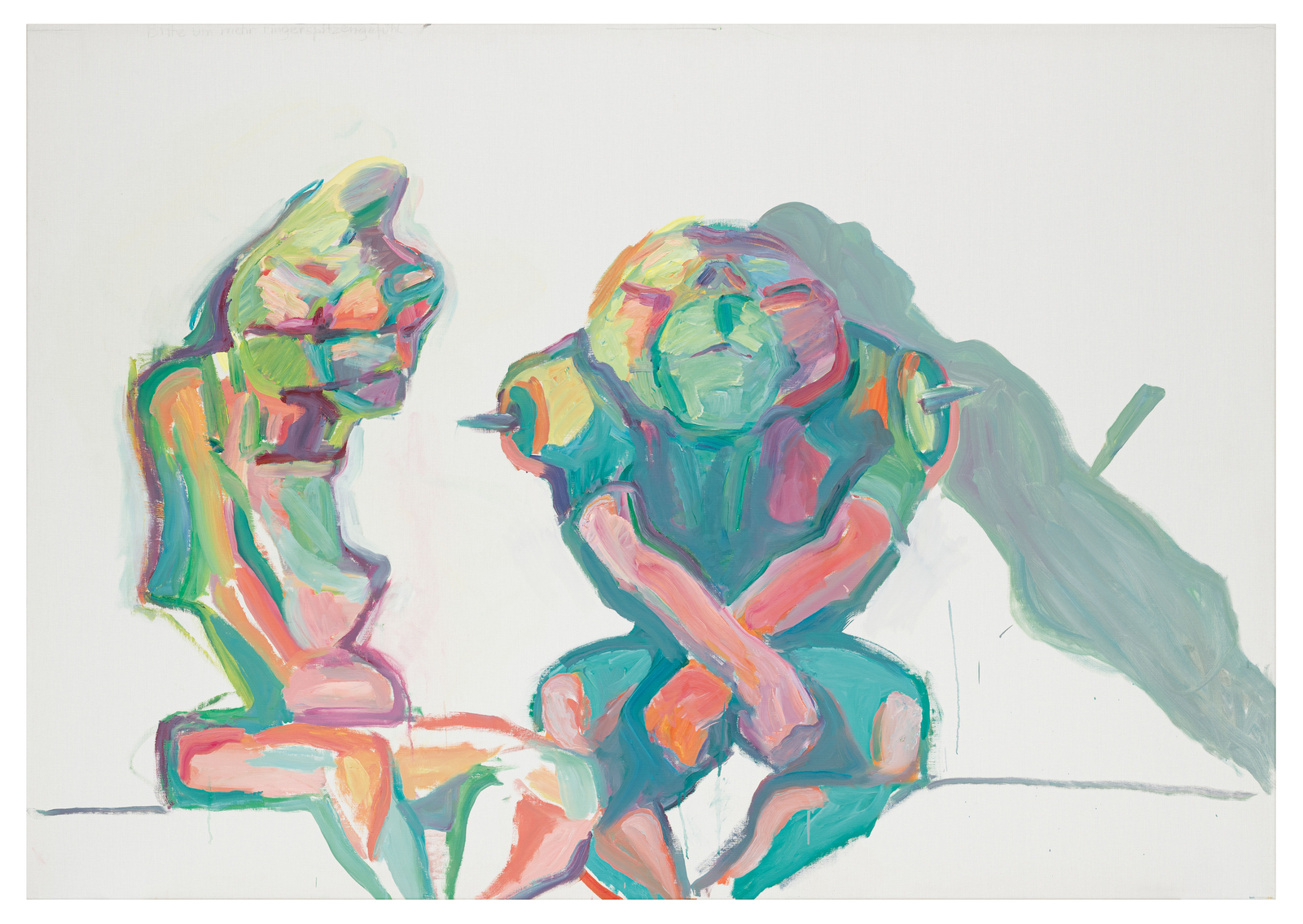
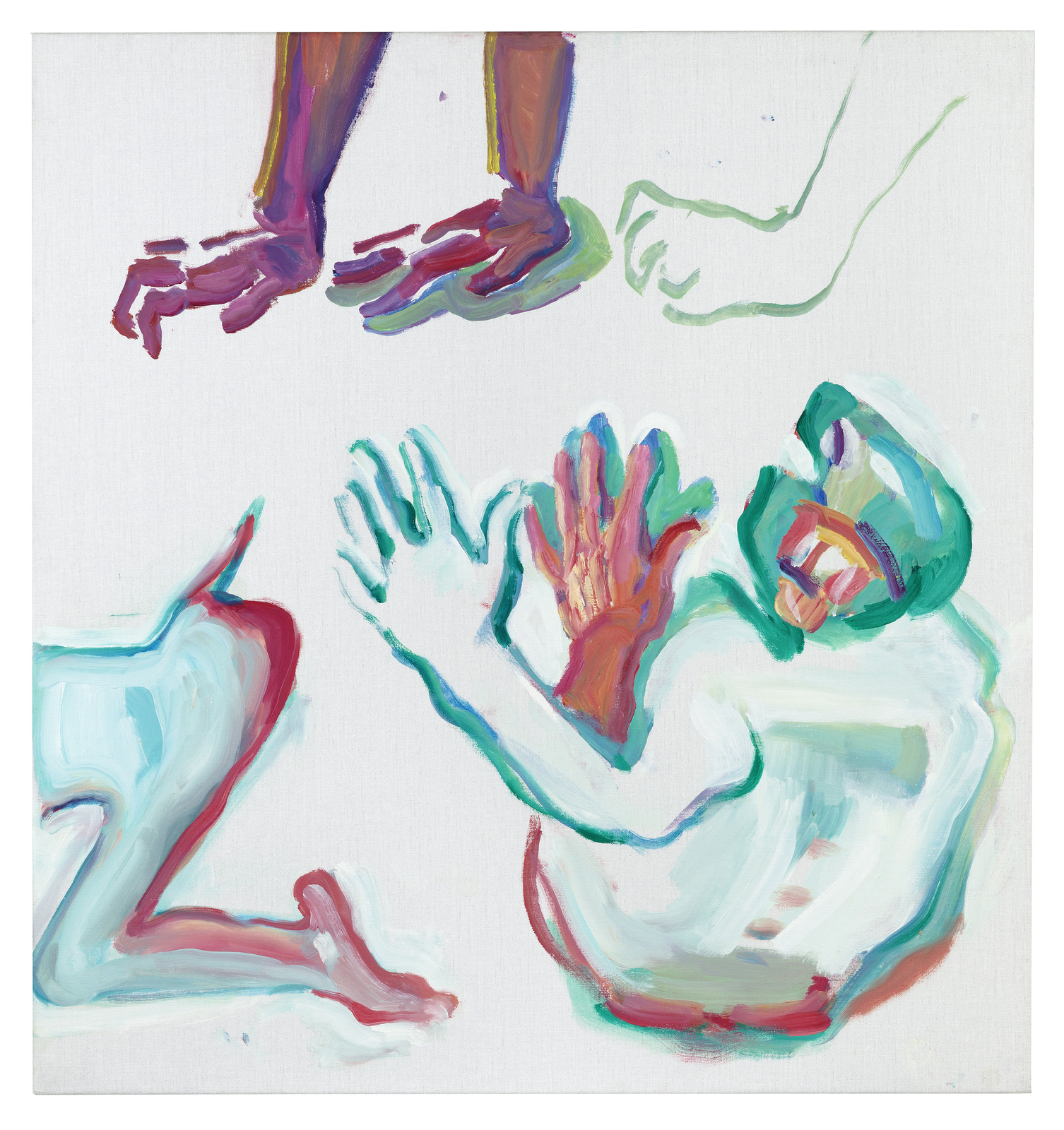
The Drastic paintings, including Bitte um mehr Fingerspitzengefühl (More Delicacy, Please) (2001), confront themes of power, dependency, aging, and mortality with unflinching directness. Relationships between men and women, the illusions of social roles, and the inevitability of impermanence and death recur throughout these canvases and works on paper. “In contrast to my pure body awareness pictures, where the aim was to seek and find sensations – with all memory pictures, intentions and themes excluded –, in contrast to this, (…) Drastic pictures reclaim memory pictures and often have an intention or even a strategy. (…) The Drastic pictures are easier to read, more vivid, more similar to memory pictures, more plain, but they have not done away with absurdity. The Drastic pictures point the finger,”5 explained Maria Lassnig.
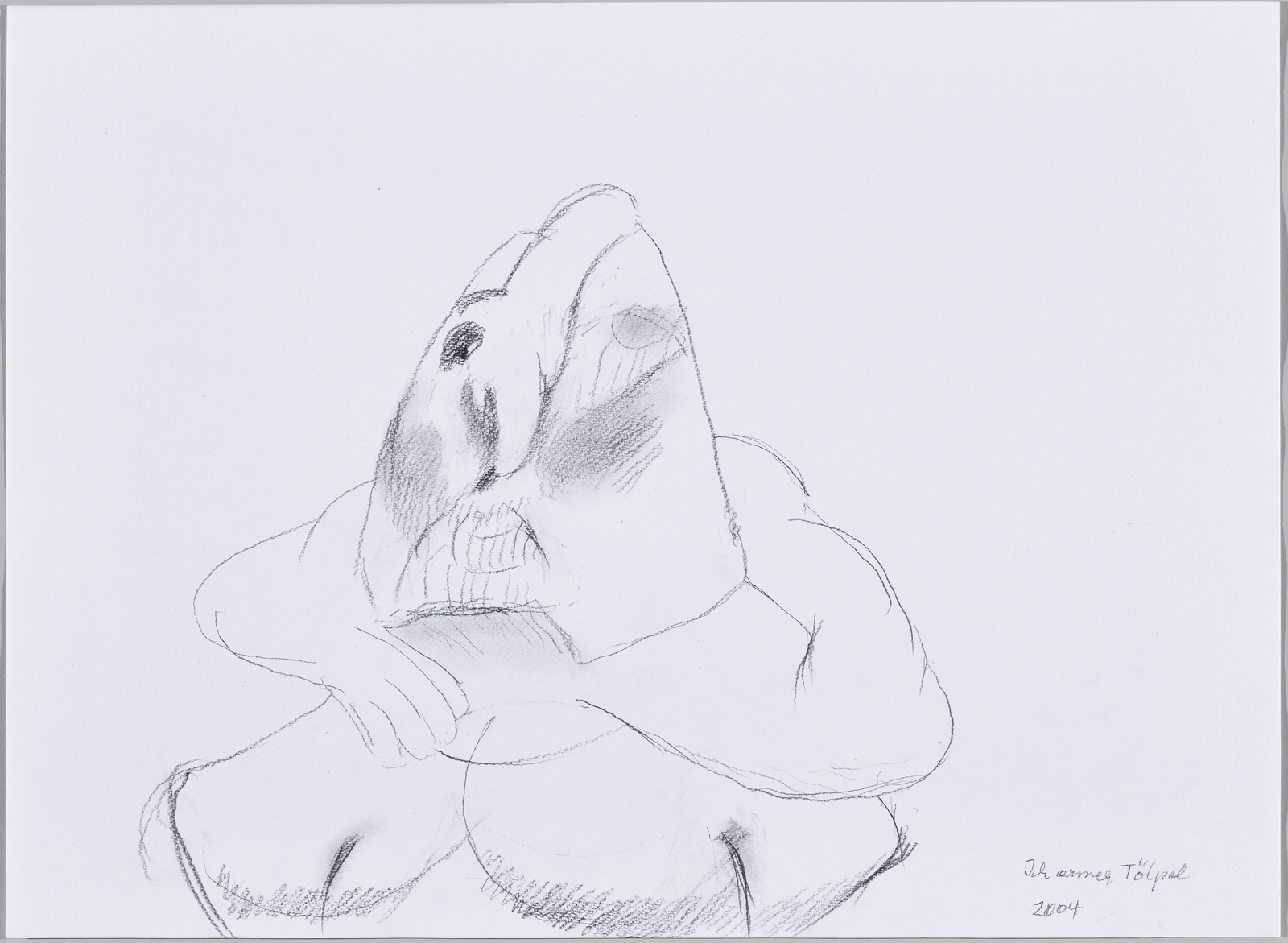
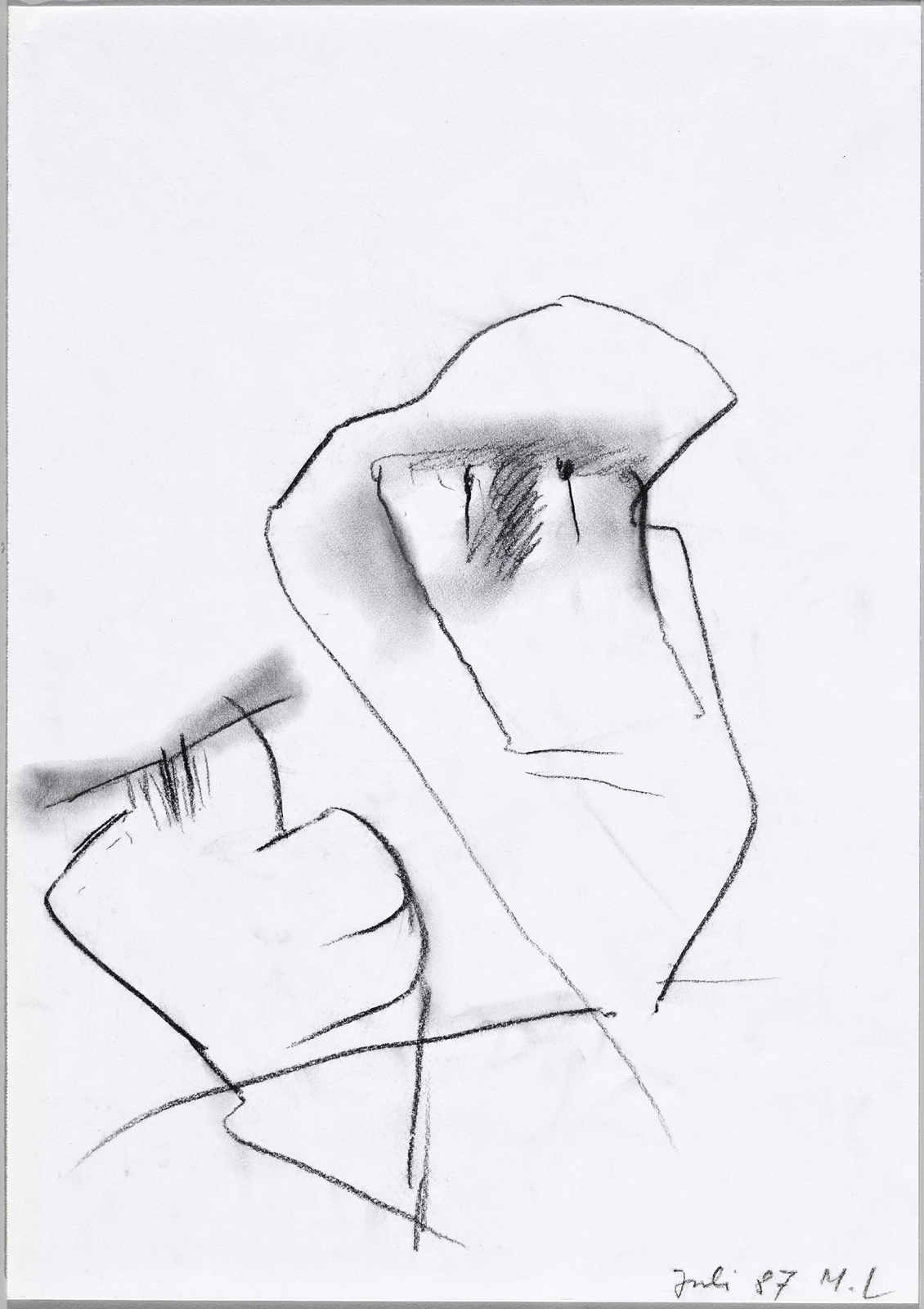
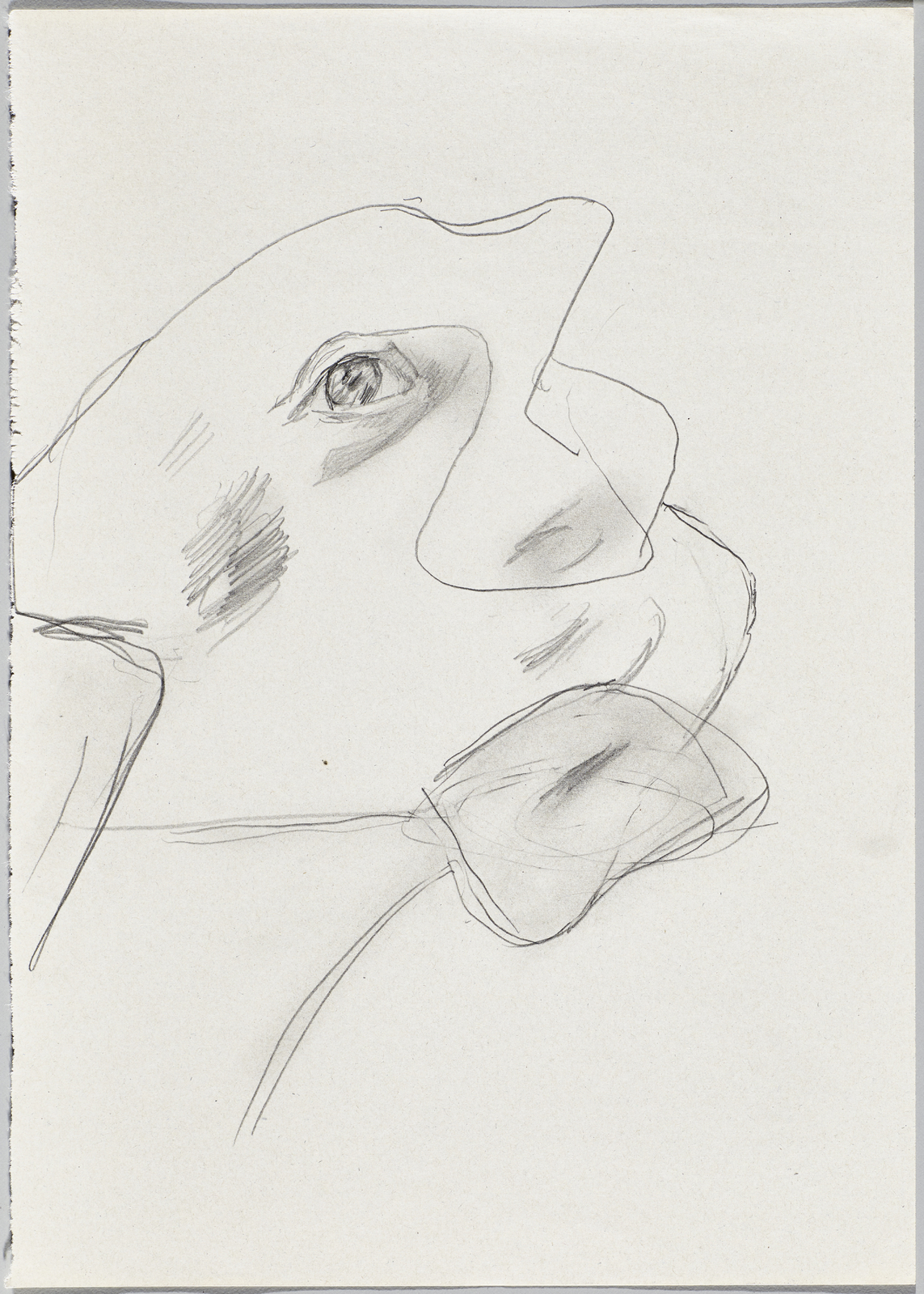
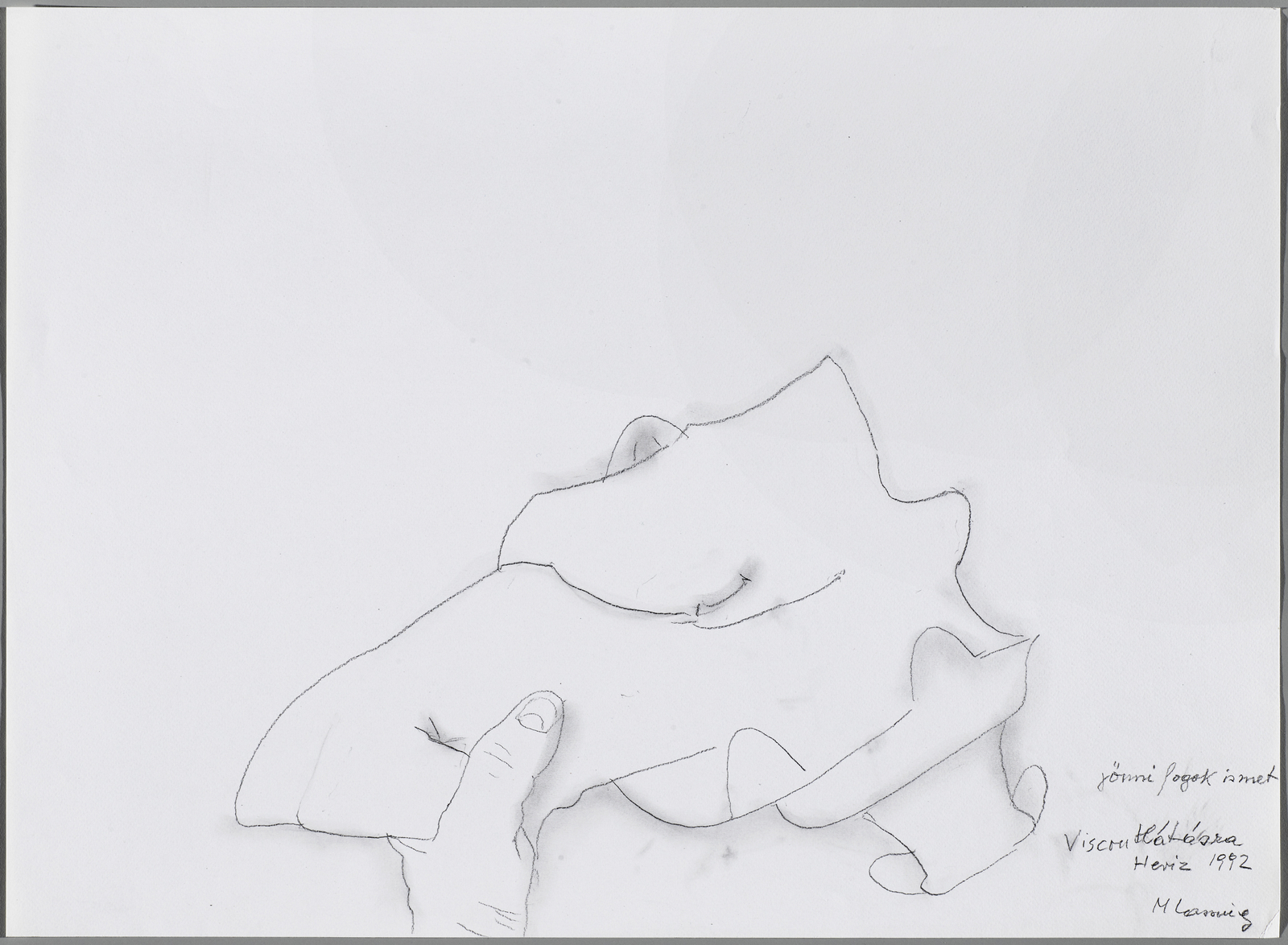
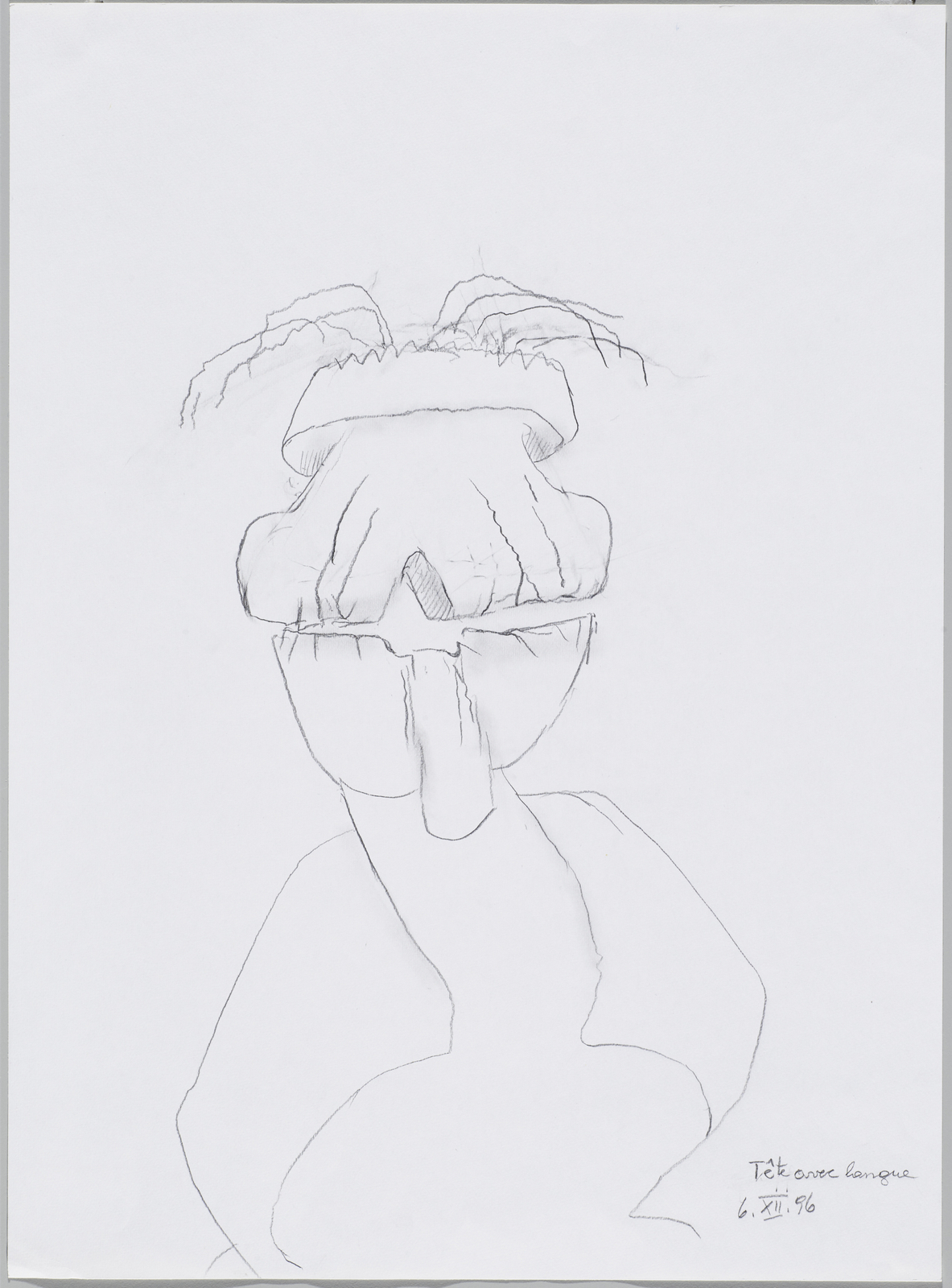
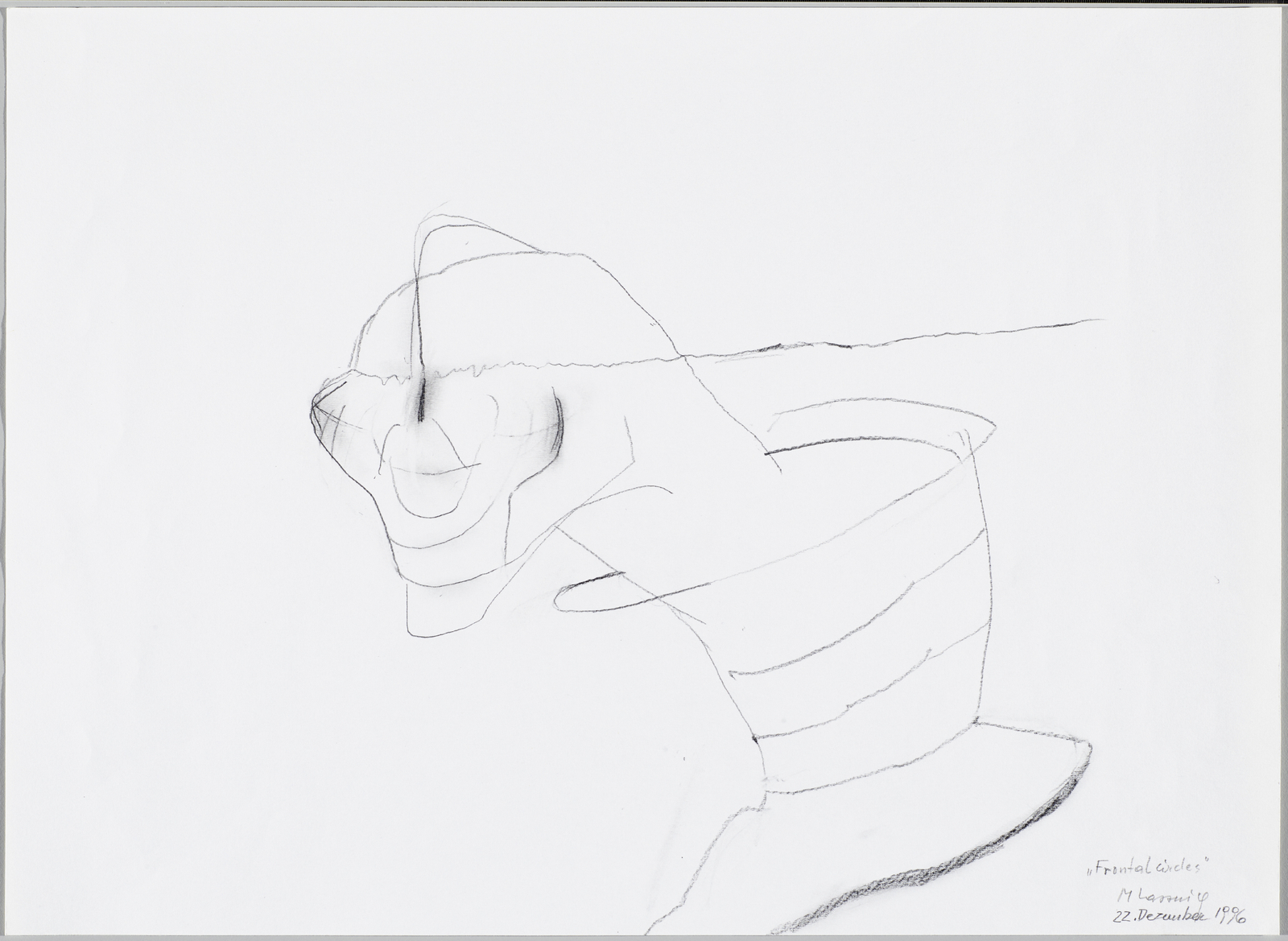
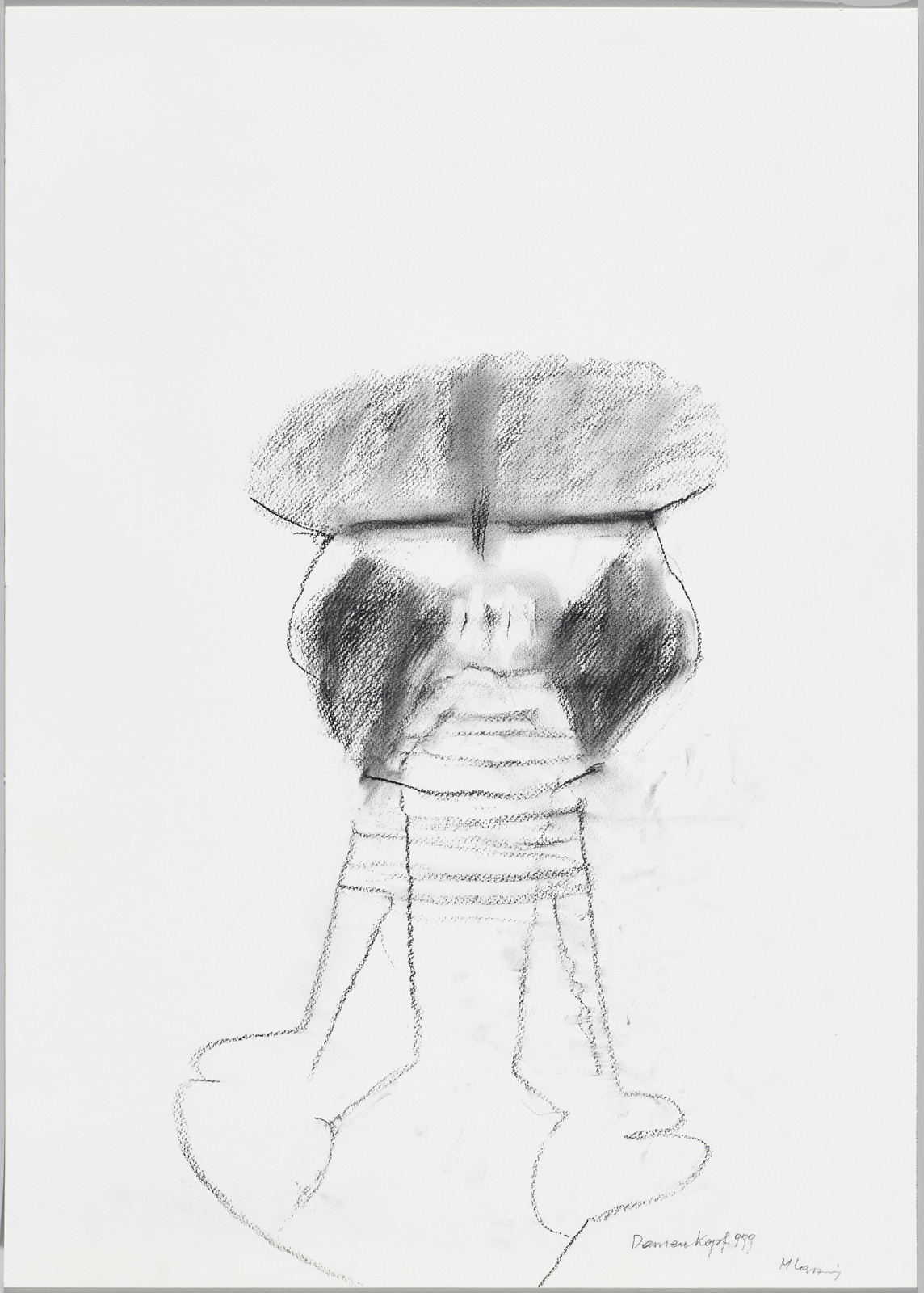
Drawing remained foundational to Lassnig’s work, functioning as a primary site of experimentation and introspection alongside painting. In her works on paper, she employed line with a particular immediacy, distilling bodily sensation and psychological tension into spare, incisive forms that often anticipate or parallel her painted compositions. However, each drawing was unique, and Lassnig rarely translated her drawings into oil paintings, or only did so in part. As she observed, “The drawing is closest to the idea; the drawing is closest to the moment.”6
Throughout her career, Lassnig resisted stylistic fixity, drawing from expressionism, surrealism, automatism, art informel, Narrative Figuration, and Pop Art while refusing to align herself fully with any single movement. Instead, she forged an independent pictorial language rooted in lived experience, one that treated the body as both subject and instrument of knowledge. The works in this exhibition reflect the sustained intensity in her final decades, affirming her lifelong commitment to painting as a means of exploring existence from within.
About Maria Lassnig
Maria Lassnig (b. 1919, Carinthia, Austria, d. 2014, Vienna, Austria)
Underappreciated for most of her life in the international art world, Lassnig is now rightfully recognized as one of the most important painters of the 20th and 21st centuries.
From a young age, Lassnig began to explore the human figure through drawing. She studied painting at the Vienna Fine Arts Academy but found the art scene at that time to be too limiting. She moved to Paris in 1960 and then to New York in 1968, continually exploring how to represent the body as it feels to inhabit rather than how it appears from the outside – a concept which Lassnig named “body awareness painting” in 1970. On returning to her native Austria in 1980, she became the country’s first female professor of painting. She also taught animation during her time at the Vienna University of Applied Arts.
Her life’s work won her many accolades including the Grand Austrian State Prize in 1988 and the Golden Lion for Lifetime Achievement in 2013 at the 55th Venice Biennale. She has been the subject of one person exhibitions at the Albertina Museum, Vienna; Deichtorhallen Hamburg; Kunsthaus Zurich; MoMA PS1, Long Island City, New York; Museum Ludwig, Cologne; Serpentine Gallery, London; Stedelijk Museum Amsterdam; and Vienna Secession among others. Lassnig represented Austria in the 1980 Venice Biennale alongside VALIE EXPORT, and she participated in documenta in Kassel, Germany in 1982 and 1997.
Opening on March 26, 2026, the Hamburger Kunsthalle will present Flow of Paint = Flow of Life, an exhibition pairing Lassnig with Edvard Munch. In the United States, the Des Moines Art Center is currently presenting Honey, You’re a Wonderful Model: Maria Lassnig’s Animated Films through May 17, 2026 further underscoring the lasting impact and continued relevance of her pioneering practice across painting and film.
Footnotes
1 Maria Lassnig, “1000 Words: Maria Lassnig,” Artforum 46, no. 10 (Summer 2008), p. 406.
2 Maria Lassnig, September 1995, notebook A35, Archive of the Maria Lassnig Foundation (in German).
3 Ibid.
4 Wolfgang Drechsler (ed.): Maria Lassnig (exhib. cat. Museum moderner Kunst Stiftung Ludwig Wien, 20er Haus, Vienna / Musée des Beaux-Arts de Nantes / FRAC des Pays de la Loire, Nantes). Klagenfurt: Ritter Verlag 1999, p. 118.
5 Carl Haenlein (ed.): Maria Lassnig. Bilder 1989–2001. Kunstpreis der NORD/LB 2002 (exhib. cat. Kestner Gesellschaft, Hanover). Hanover 2001, p. 78 (in German).
6 Maria Lassnig, “Body Awareness Manifesto,” Maria Lassnig: Works, Diaries & Writings (London: Koenig Books, 2015), 90.
![Maria Lassnig, Be-Ziehungen VII (Schicksalslinien) [Re-lations VII (Lines of Fate)], 1994](https://static-assets.artlogic.net/w_1600,h_1600,c_limit/exhibit-e/63692af4d0d707561d062132/31082ea13e1c0e42d907a67063bf4558.jpeg)